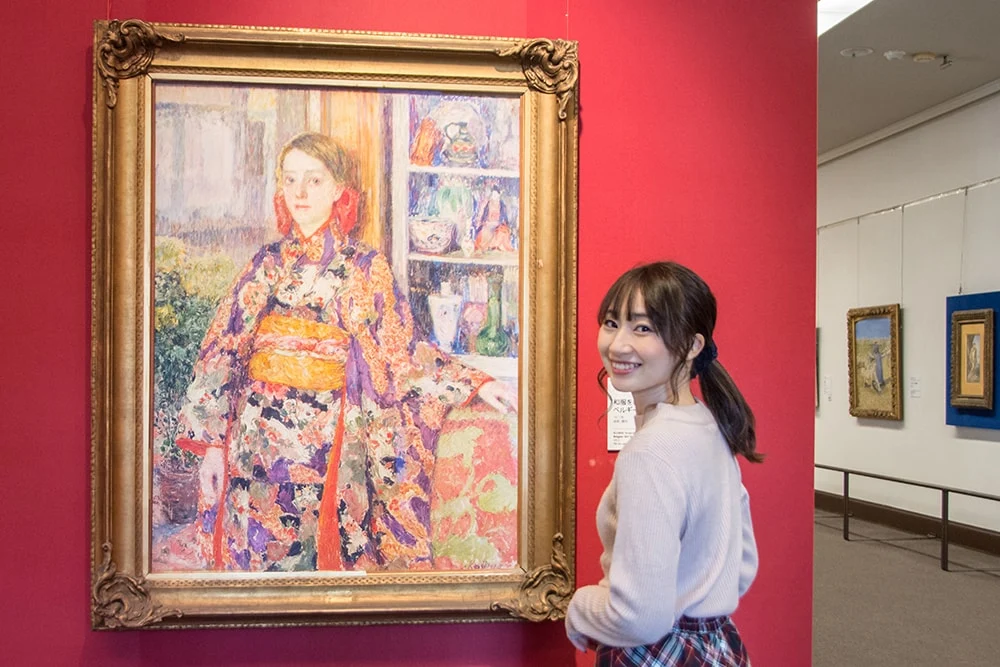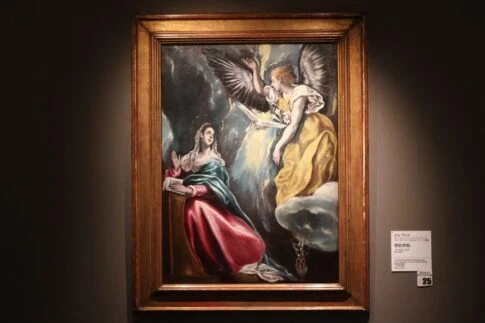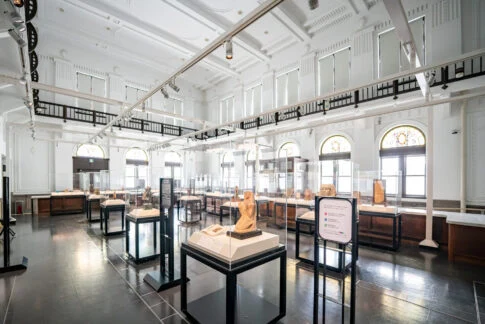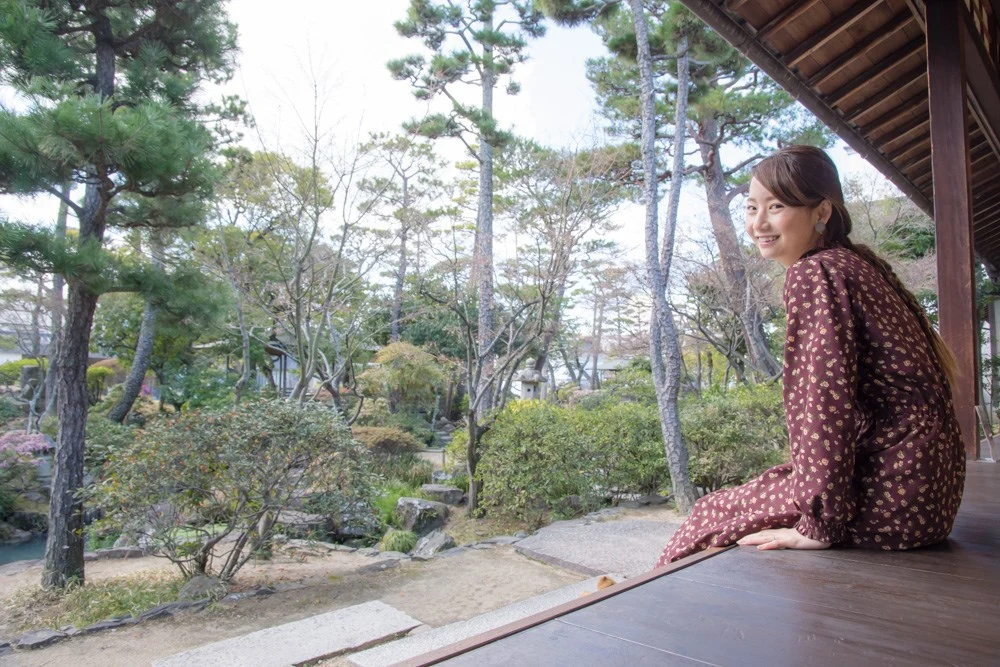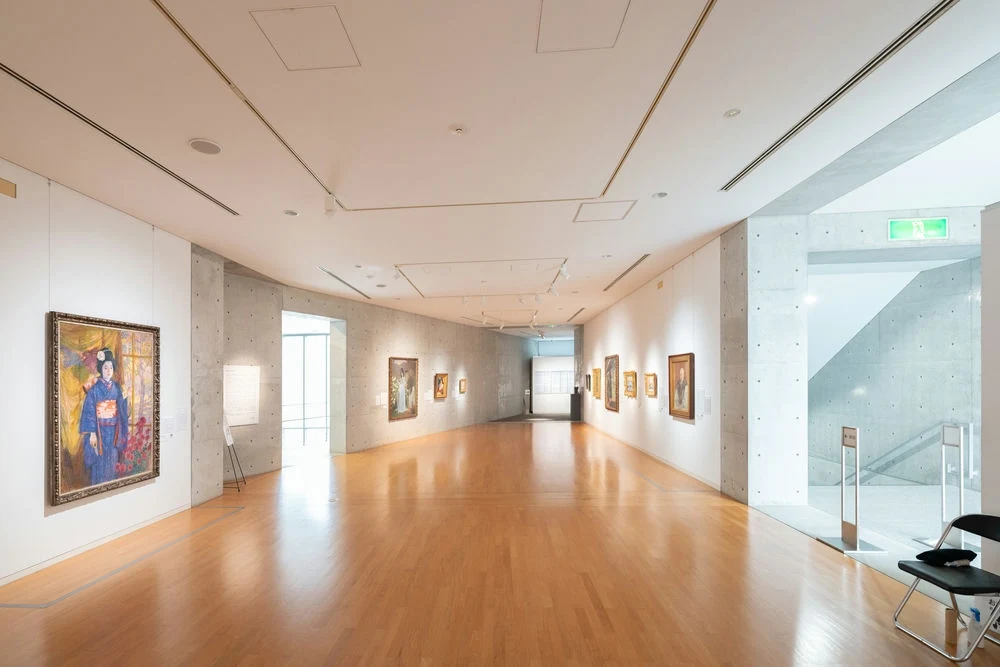
The role of a museum is not just to collect and exhibit artworks.
At the Ohara Museum of Art in the Bikan Historical Area, various initiatives are being undertaken, including support for artists and activities to promote art.
One of the initiatives is business training.
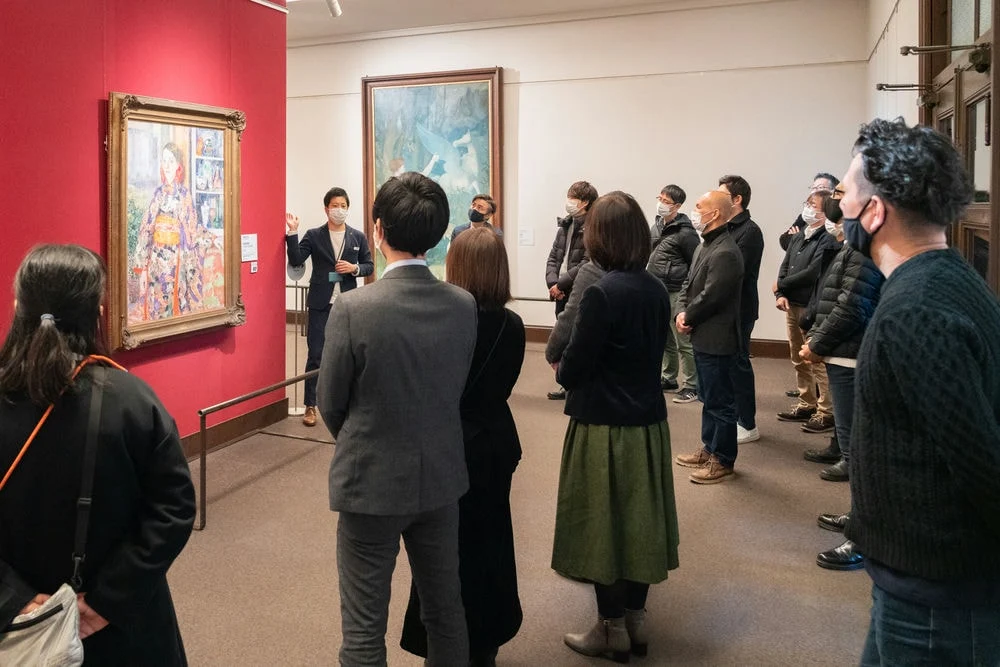
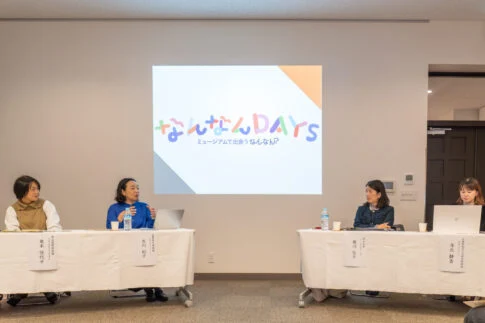
The Ohara Museum of Art conducts a program that allows participants to learn through "dialogue-based appreciation" where they discuss artworks while viewing them.
We closely covered the business training at the Ohara Museum of Art.
Photography is generally prohibited inside the Ohara Museum of Art. This time, we have received special permission to take photos.
What is Dialogue-Based Appreciation at the Ohara Museum of Art?
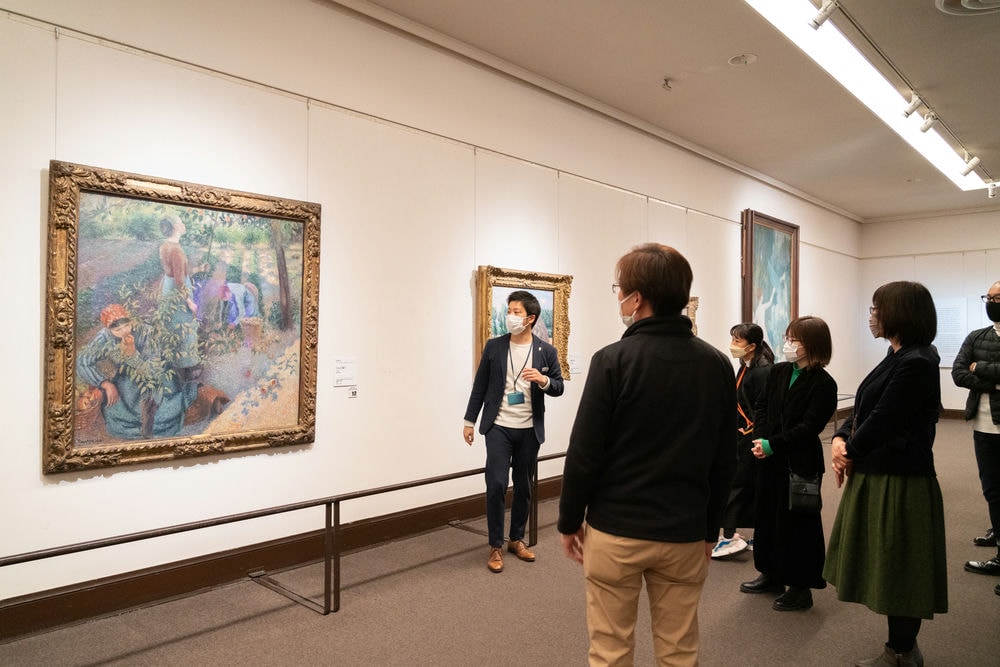
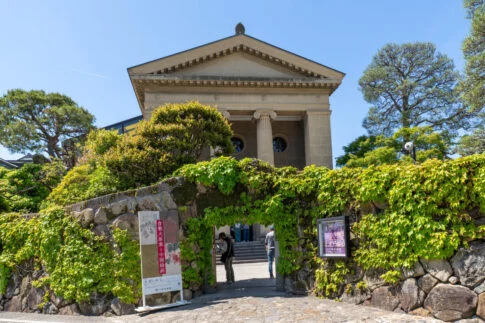
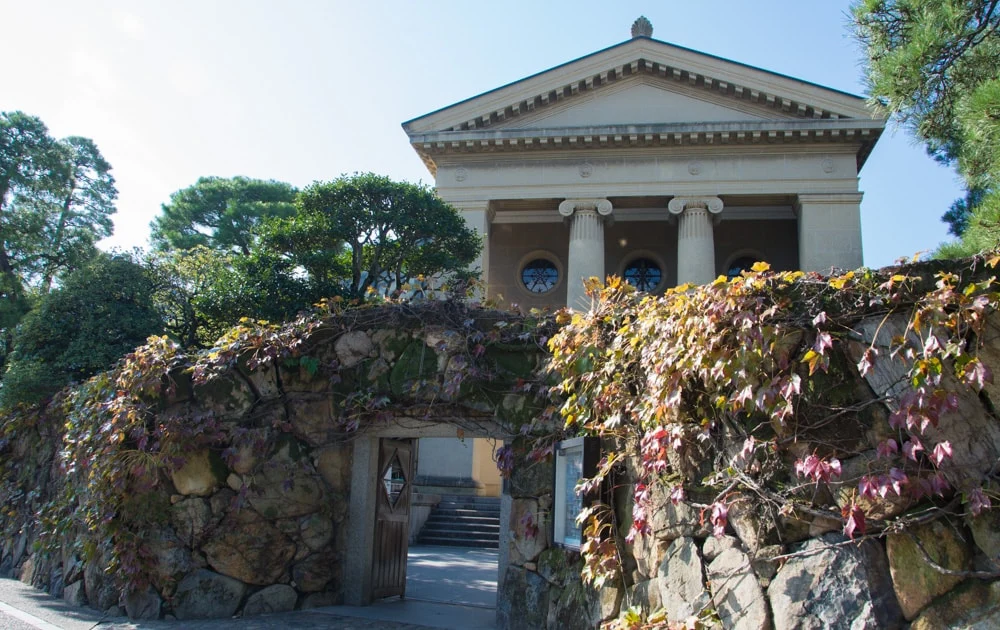
The Ohara Museum of Art was established in 1930 (Showa 5) as the first private museum in Japan to permanently exhibit Western art.
You might have the image of a museum as a place to quietly observe artworks.
However, what has recently gained attention is "dialogue-based appreciation."
This is a method where multiple visitors discuss their feelings and thoughts while appreciating the artworks.
The Ohara Museum of Art has been conducting dialogue-based appreciation for over 20 years.
Previously, Kurashiki Tocotoco interviewed Hideyuki Yanagisawa, who laid the foundation for dialogue-based appreciation at the Ohara Museum of Art.
We covered the background, his thoughts, and the significance of the initiative.
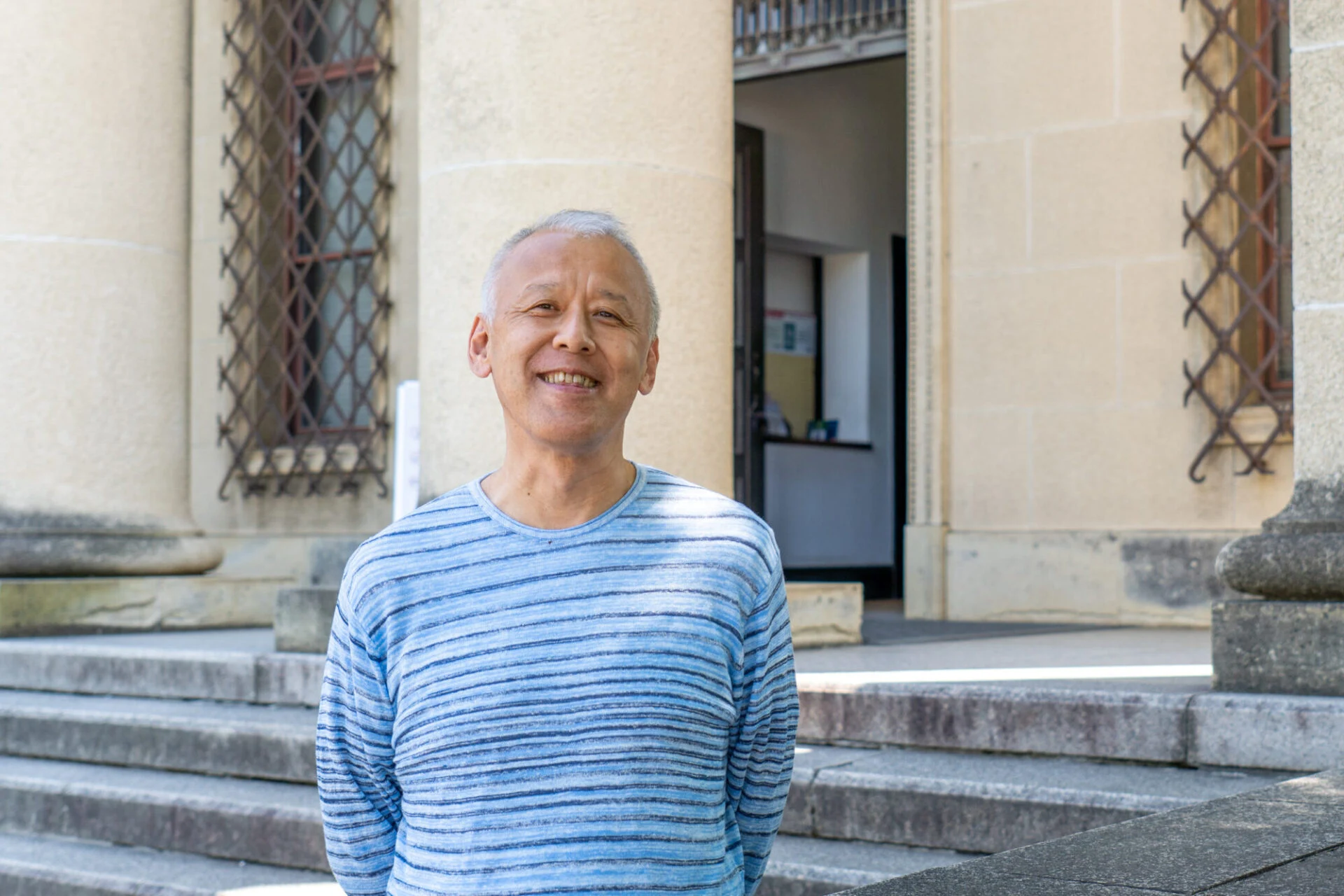
What is Pegasus Candle, which participated in the business training?
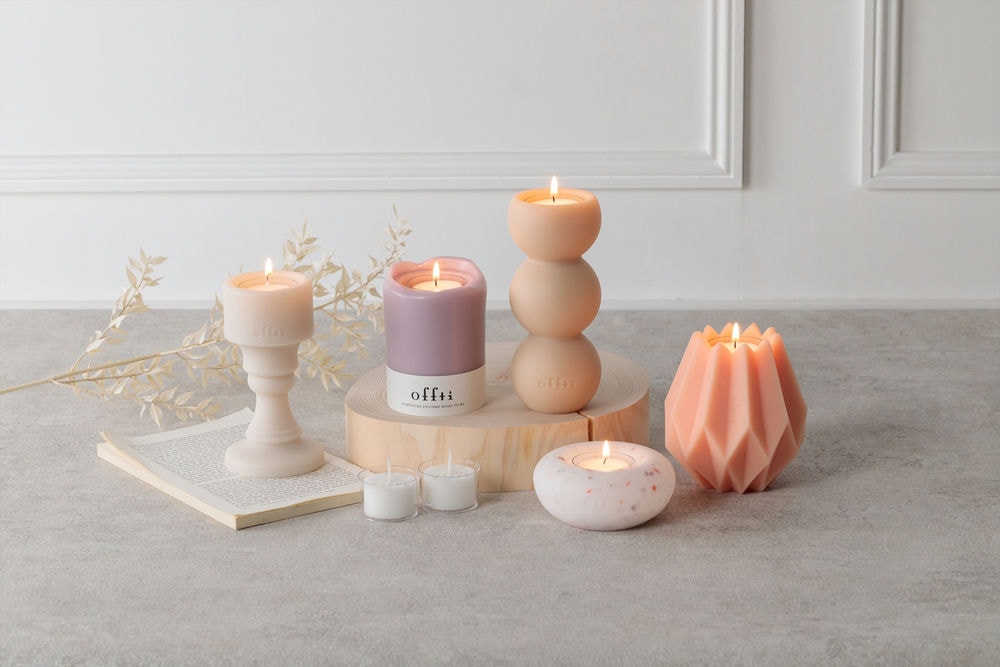
During the interview, the company participating in the business training was Pegasus Candle Co., Ltd., located in Kurashiki.
Pegasus Candle Co., Ltd. was founded in 1934 (Showa 9) and develops, manufactures, and sells candles.
Their products are sold to wedding venues, hotels, florists, funeral homes, and gift shops across the country. They have been a top player in the domestic wedding candle market for many years.
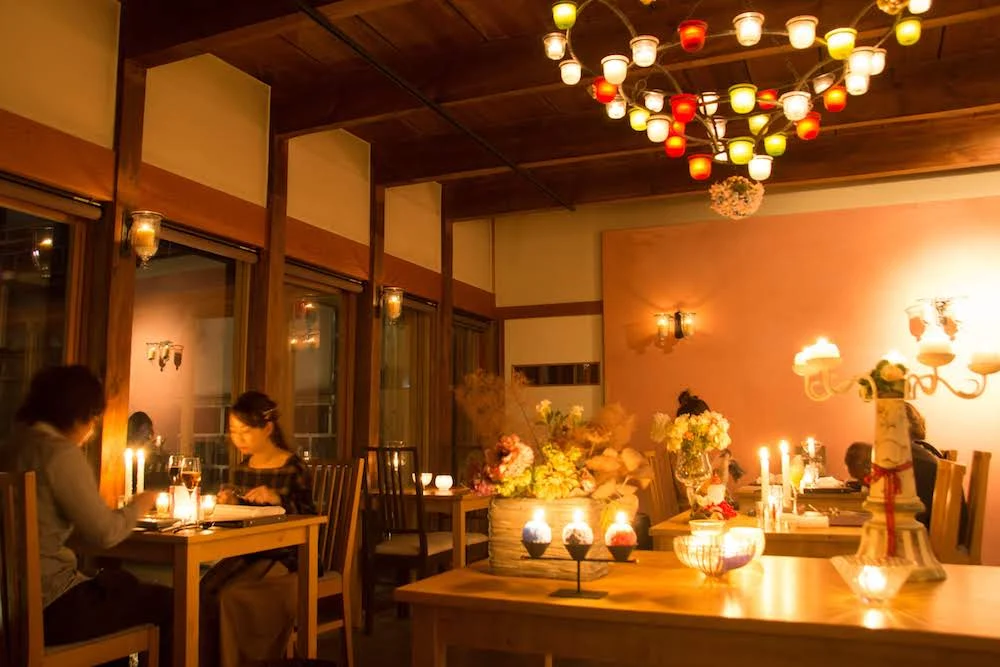
Additionally, they operate a creative French restaurant called Candle Table Watanabe in Kurashiki City.
More than half of the employees are residents of Kurashiki City, but their frequency of visiting the Ohara Museum of Art varies.
Interest in the museum as a whole also varies; some people actively visit the museum, while others said, "I don't know what to look at in a museum, so I don't think to go on my own."
Start of the Training
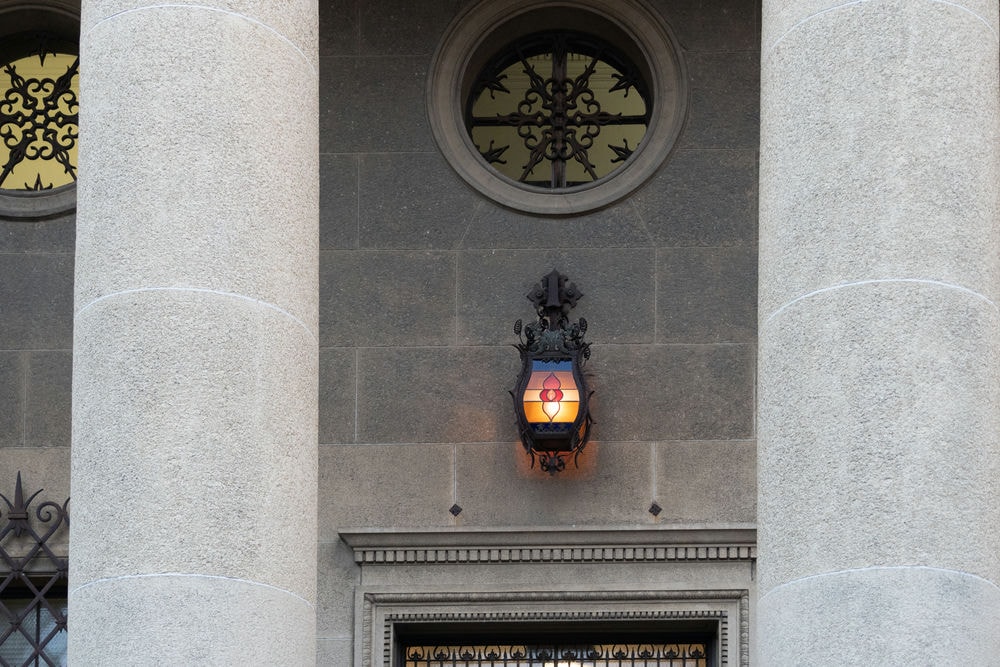
The business training started after the Ohara Museum of Art closed, in a private event. It seems that the main building's front lighting is only turned on during private events.
First, participants listen to an explanation about the Ohara Museum of Art and the Ohara family.
The explanation was easy to understand, providing the history and background of the museum without feeling stiff.
Participants understood the differences from other museums, and feedback included comments like, "The speaker was good and easy to understand," and "I was glad to learn more since I only knew a little about it."
Ice Breaker Work 1: Find the Odd One Out
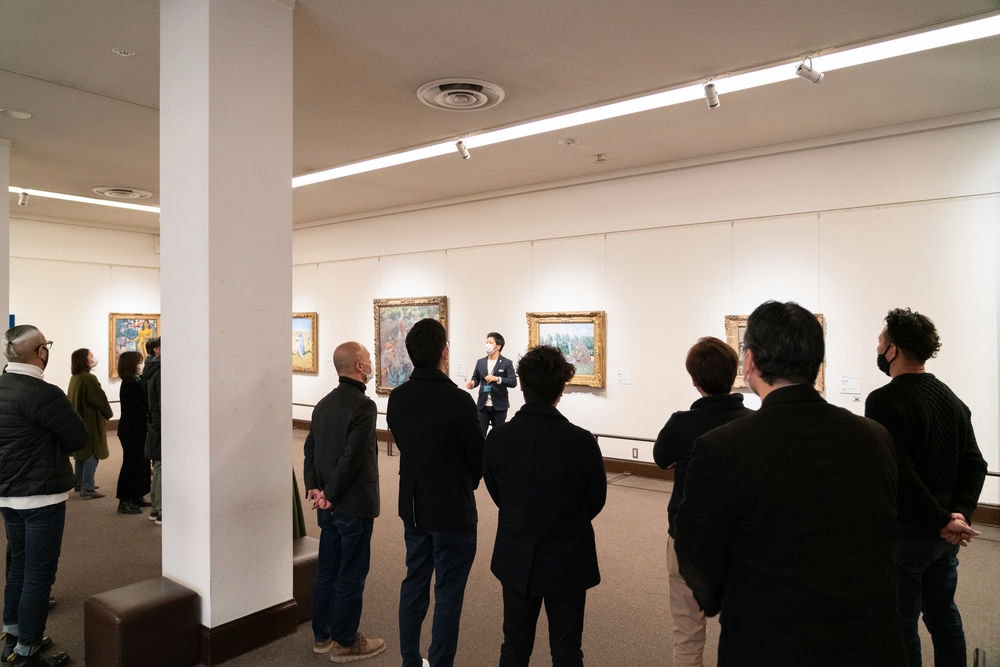
Next, participants moved in front of the artworks and tried to find the "odd one out" among five pieces.
There is no "absolute correct answer."
While comparing, they search for their own odd one out.
The artworks in question were pieces I had seen many times before. However, by comparing and examining them, I realized I was trying to read more from the artworks than I had before.
After a while of appreciation, participants presented the artwork they thought was the odd one out and their reasons.
Here are some of the opinions shared:
- The canvas is larger than a person's height
- What is depicted is not real
- It gives a dark impression
- According to the caption, the author is not French
- The painting technique is detailed and precise
When someone pointed out, "This artwork doesn't depict the sky," the facilitator provided an interesting explanation about "the difference in angles."
By listening to others' opinions, I had many realizations, thinking, "I hadn't focused on that, but indeed!"
Ice Breaker Work 2: Choose a Work You Want to Take Home
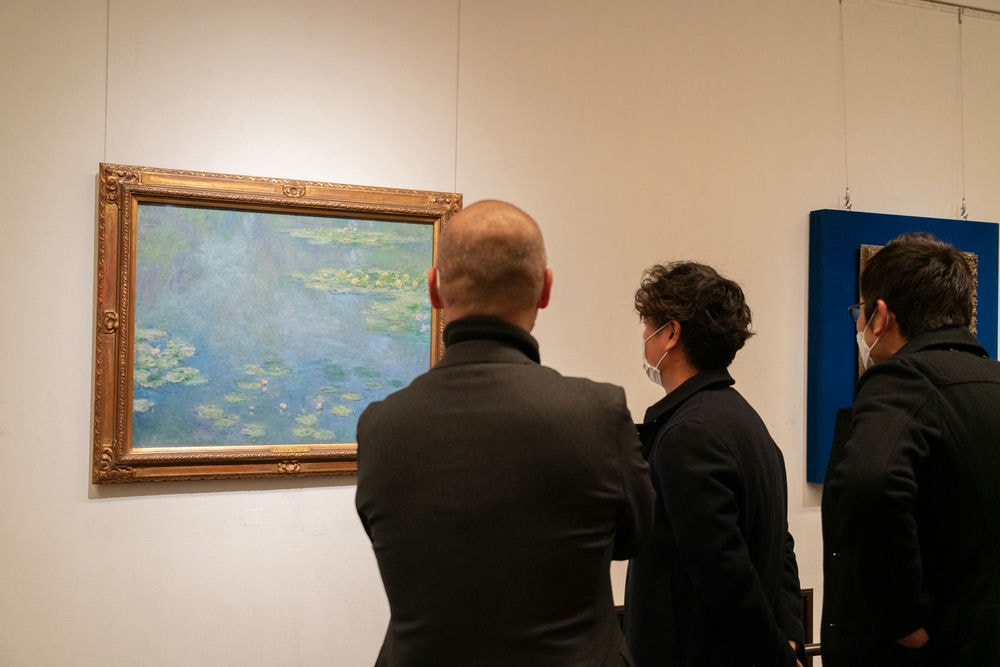
Next, participants chose a piece from several artworks that they would "like to take home" and presented their reasons.
The painting they like and the one they want to display at home might be different.
Thinking, "If I were to decorate my home," made the artworks in the museum feel much closer.
Then, they shared their reasons with others who chose the same artwork. This also provided an opportunity to talk with people they don't usually interact with.
If this training were called "expressing your opinions in a museum," one might feel hesitant to speak up without knowledge.
However, in this training, I think an atmosphere was created where it felt okay to speak freely.
Group Work
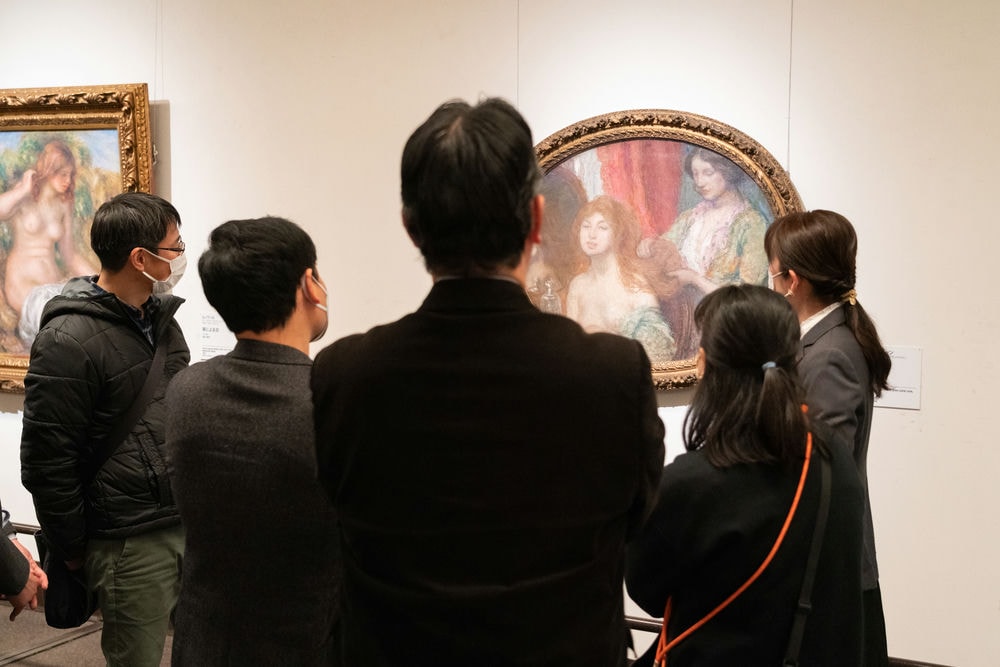
Once the atmosphere became conducive to speaking up, participants were divided into small groups for dialogue-based appreciation.
Express Your Opinion
As a mindset, the following guidance was provided:
- Express your thoughts without being bound by the correct answer
- Do not deny others' differing opinions
In front of the artwork, participants first observed for about a minute to see what was depicted.
For example, the group that viewed Aman-Jang's "Hair" discussed the following:
- What do you think is happening?
- What kind of relationship do the two have?
- What time of day is it, and what is the situation?
They also asked questions like, "Why do you think this painting is oval?" that went beyond what was depicted in the painting.
Each person imagined the feelings of the author and exchanged opinions.
Discover Differences in Perception: Part 1
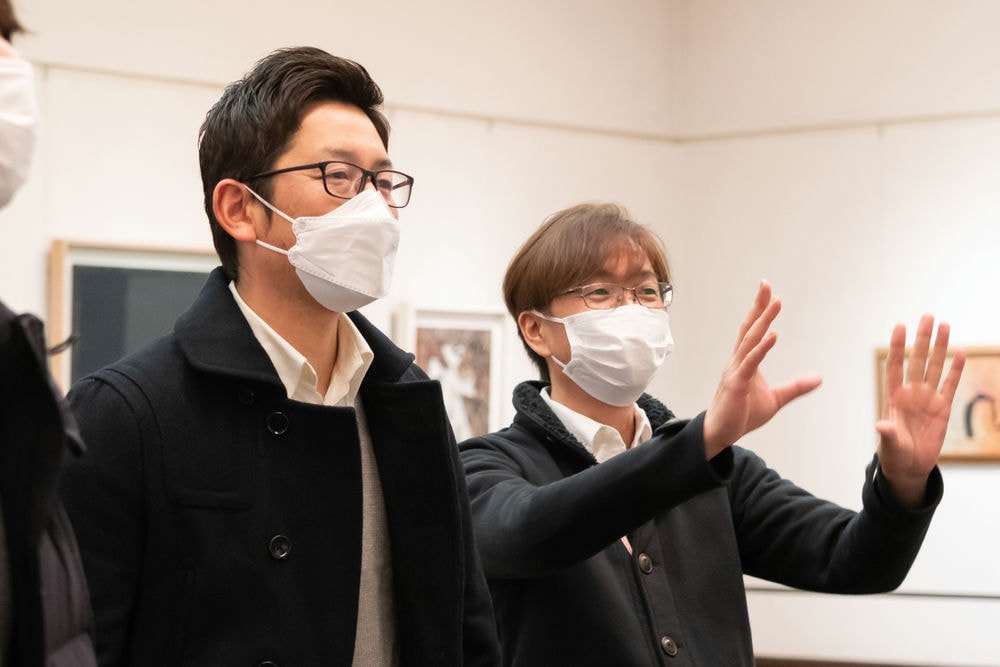
In a group that viewed a certain painting, the following conversation took place.
Facilitator: "What do you think is depicted?"
Participant A: "A human? I think a human is being supported by something."
Facilitator: "I see, something that looks like a person is being supported. Do you think there is a gender?"
Participant A: "The left one is probably male and the right one is female."
Facilitator: "I see, how about others?"
Participant B: "I think both the left and right are female."
Facilitator: "Thank you. Did anyone think the genders were different or that they weren't human at all?"
Participant C: "I thought it looked like a robot from Star Wars."
Even just "what it looks like" shows that there are three different perspectives.
Discover Differences in Perception: Part 2
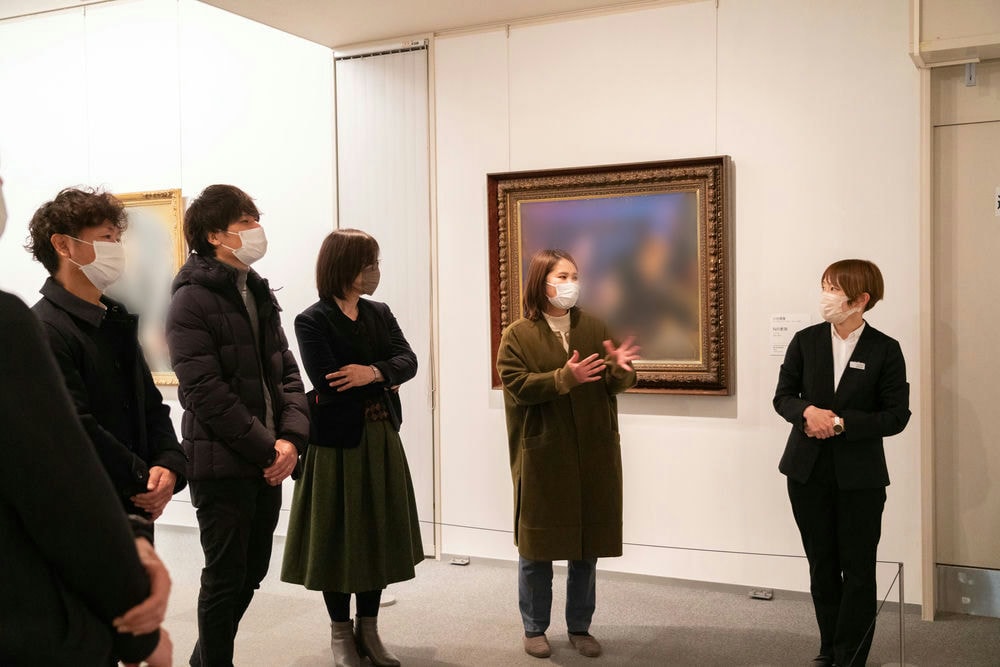
Through the facilitator's questions, "discrepancies in perception that might be overlooked in everyday conversation" were also revealed.
One painting was described as looking like it was heading towards a sacrificial ritual.
When asked how often that ritual is performed, a male participant answered, "I don't think it's that frequent." I was thinking, "Maybe once every five years?"
However, when the facilitator asked the male participant for a specific number, he replied, "About once a month."
The frequency I inferred from the phrase "not frequent" was 60 times different from the actual thought of the speaker. Such discrepancies may frequently occur in daily life.
Even when looking at the same thing and hearing the same words, the sensations received can be vastly different.
Listening to others' opinions is interesting.
It changes how one sees the artwork and increases interest in the people who viewed it together.
Recognize Diverse Values
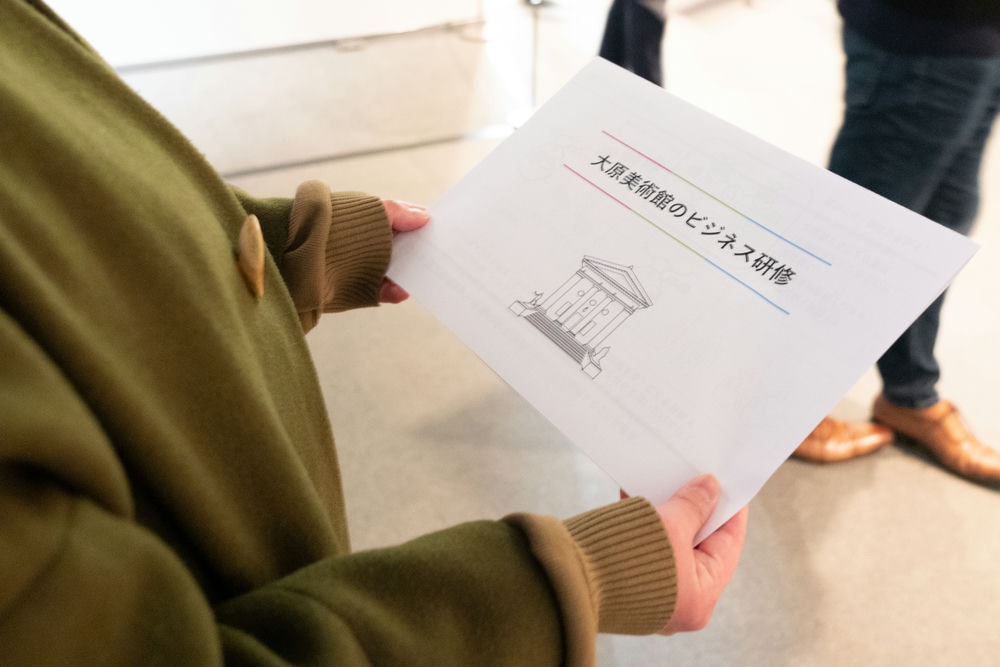
After viewing multiple artworks, participants regrouped.
Materials were distributed, and they heard about the goals of this training.
I won't go into details for those who will take the training, but the two important keywords are:
- Diversity
- Psychological Safety
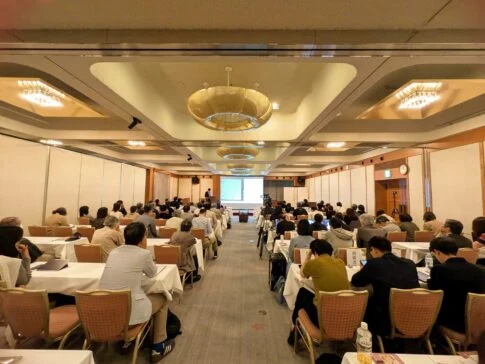
The overall process concluded in about two hours. It was a friendly and enjoyable training session.
Interview with the President of Pegasus Candle
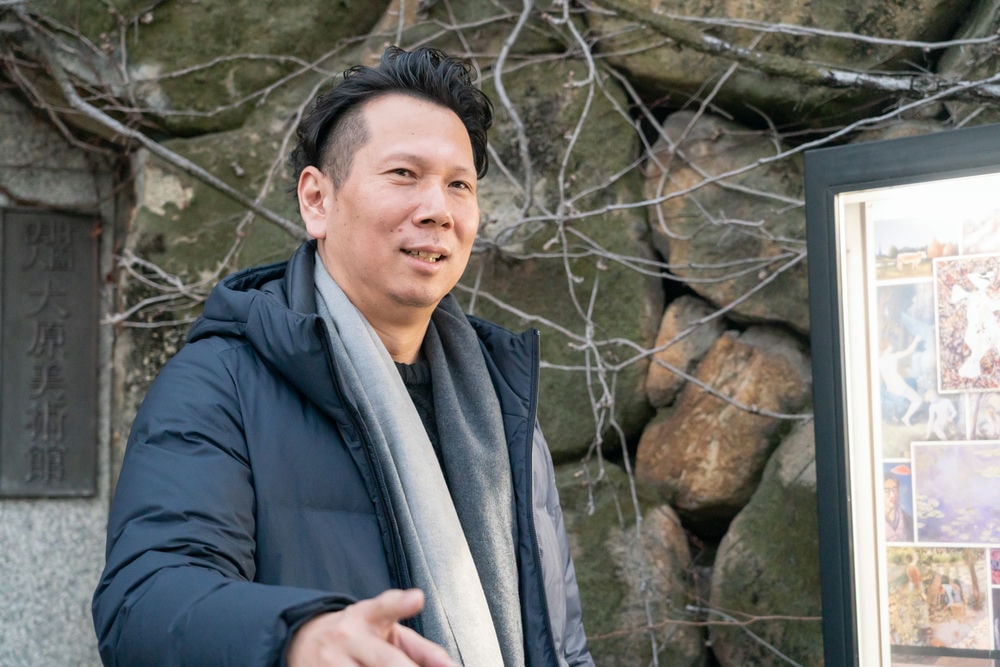
After the training, we interviewed Isao Inoue, the President of Pegasus Candle.
What is the reason for implementing this training?
Inoue
A few months ago, I was brought here by someone else and experienced a dialogue-based appreciation training. It was really interesting, so I thought it would be great for our employees as well.
Corporate training often involves sitting and looking at whiteboards or materials. However, I thought this would allow for active participation.
Also, when I asked the participants today, it seemed that most of them had not visited the Ohara Museum of Art in the last five years, so even though they live in Kurashiki, they rarely have the opportunity to come.
We are a company based in Kurashiki, but I was wondering how it would be if we didn't know much about the Ohara family or the Ohara Museum of Art when talking to customers from other prefectures.
During the training, they talked about the history of the Ohara Museum of Art, which I found very interesting as a citizen of Kurashiki.
Can you tell us about the challenges you face and the outcomes you expect from this training?
Inoue
Our company has many long-serving employees. When doing the same job for a long time, it becomes efficient.
However, borrowing the words from the training, I think it can lead to simplifying things without seeing others' perspectives or viewing things only through our own lens.
Therefore, I thought this training, which helps recognize fixed ideas through various viewpoints, would be perfect.
Especially in the product development department, where the same people have been doing it for a long time, I hope it will provide some stimulation.
After seeing the employees actually participating in the training, was there anything that differed from your expectations?
Inoue
No, it was exactly the kind of training I wanted.
Without the final explanation, I think it would have ended with "It was a fun visit." Also, if you say it at the beginning, people might get tense.
It was very good that they could first enjoy and actively speak up, and then provide an explanation at the end.
Pegasus Candle Employee Interview
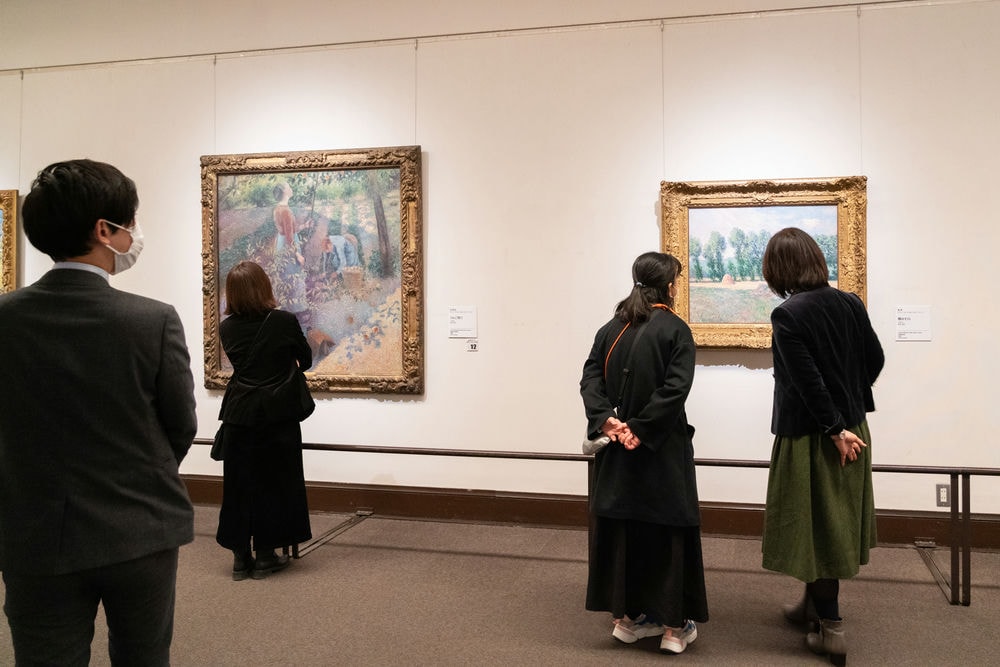
Next, we spoke with employees who participated in the training.
What did you think when you heard that there would be employee training at the Ohara Museum of Art?
30s Female
Since training often involves lectures, I couldn't imagine what kind of training it would be.
30s Male
I have been to the Ohara Museum of Art 2-3 times, but when I look at the paintings, I only think simple things like "That's amazing," so I was quite anxious about whether I would be okay.
How was today's training, in reality?
30s Female
It was interesting.
There were new discoveries and it was surprising to see how differently people perceive things.
30s Male
I also found it purely enjoyable.
What did you think throughout the training?
30s Male
I am the youngest in my current department, so when others have different opinions from mine, it is often difficult to express what I want to say.
I think this training will create an environment where my superiors are more likely to listen to opinions, and I can also feel that it's okay to express my own opinions. It was great that we could all share the importance of expressing opinions without denying each other.
30s Female
There was a painting that looked like a ladder and a shelf. I thought, "This is a side view of something like a ladder extending vertically."
But listening to everyone's opinions, some were looking up while others were looking down from above.
I felt that there are so many different perspectives and opinions.
Also, if opinions are dismissed outright, people will inevitably find it difficult to speak up and lose confidence.
In both work and private life, I want to engage in communication where after accepting the other person's opinion, I can say what I think or suggest how about this way.
Let's Apply What We Learned from Dialogue-Based Appreciation to Work
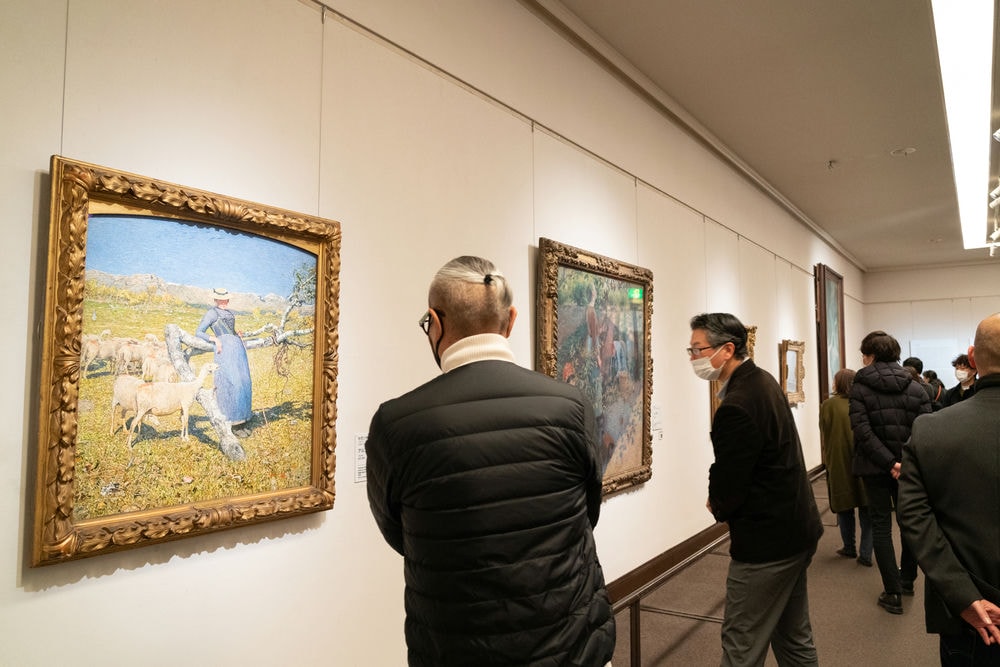
At the Ohara Museum of Art, we are training facilitators who can conduct dialogue-based appreciation, and many staff members can serve as facilitators.
The facilitators skillfully ask questions while incorporating participants' opinions, making it easy to express opinions in a fun atmosphere.
Listening to others' opinions helps you notice perspectives you hadn't thought of.
In work, collaborating with others often leads to more expansive ideas than thinking alone.
I feel that we learned through practice what we want to keep in mind during dialogue.
In a cheerful atmosphere, dialogue-based appreciation allows us to experience the differences in how each person feels and thinks.
This will surely contribute to the diversity and high psychological safety that are valued in team building today.
If you're interested, please feel free to contact the Ohara Museum of Art.
Articles about the Ohara Museum of Art
Data on the Ohara Museum of Art
| Name | Ohara Museum of Art |
|---|---|
| Location | 1-1-15 Chuo, Kurashiki City, Okayama Prefecture |
| Contact | 086-422-0005 |
| Parking | None |
| Opening Hours | 【December to February】 9:00 AM - 3:00 PM (Last admission: 2:30 PM) 【March to November】 9:00 AM - 5:00 PM (Last admission: 4:30 PM) |
| Closed Days | Monday If it coincides with a public holiday or substitute holiday, it will be open Winter closure and temporary closures may occur |
| Admission Fee (including tax) | 【General】 Adults: 2,000 yen High school, junior high, and elementary school students (under 18): 500 yen |
| Payment Methods |
|
| Reservations | Available No reservation needed for individuals |
| Smoking | Completely non-smoking |
| Restrooms | Western-style toilets, barrier-free toilets |
| Childcare | Nursing room, diaper changing table, stroller rental The nursing room is located in the Craft Museum Diaper changing tables are available on the 2nd floor of the main building and in the Craft Museum |
| Barrier-Free | Wheelchair rental, ramps, barrier-free toilets, elevators |
| Website | Official Ohara Museum of Art Website |