
Individuals Passionate About Peach Research
How is variety improvement done?
Ban
For example, let's say there is a large but sour peach and a small but delicious and sweet peach.
How can these be improved to make them taste better? For instance, does pollination lead to fruit, or is it through grafting? Research is conducted on such matters.
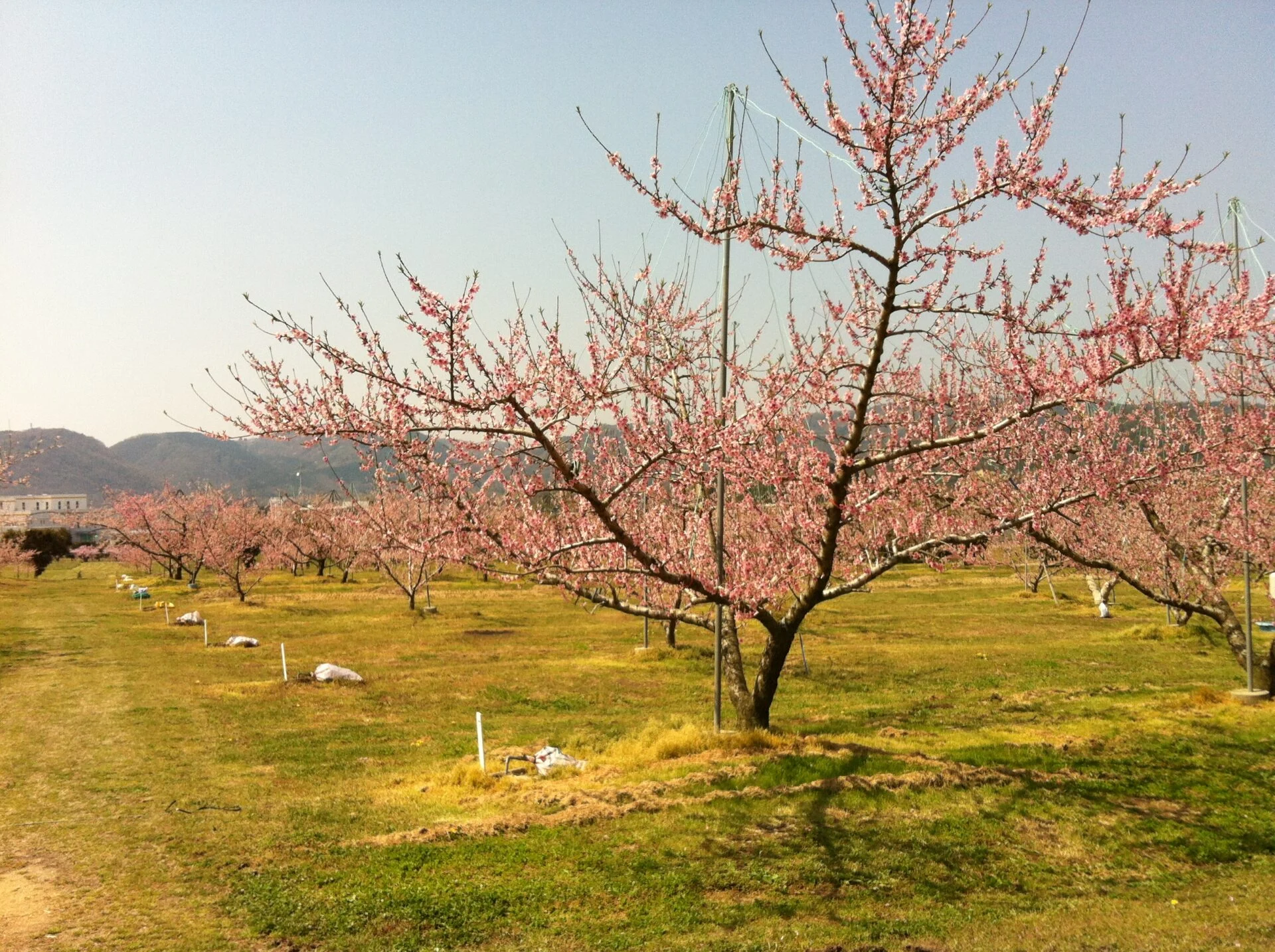
There are various genetic variations, such as those that are resistant to pests, not tasty but resistant to drought, or resistant to flooding.
In the Meiji era, research was conducted to select and narrow down varieties to find those that are delicious and easy to cultivate.
Individuals like Koyama Masuta and Okubo Shigegoro were very passionate about peach variety improvement and cultivation at that time.
And finally, a large and sweet peach was created.
Ban
Now, let me talk about Kurashiki.
In Kurashiki, there was a research institute called the Ohara Shonokai Agricultural Research Institute, established by Ohara Magosaburo, which was a research institute to promote agriculture.
Koyama Masuta from Akaiwa was invited to conduct research on peach cultivation at that institute and was teaching there.
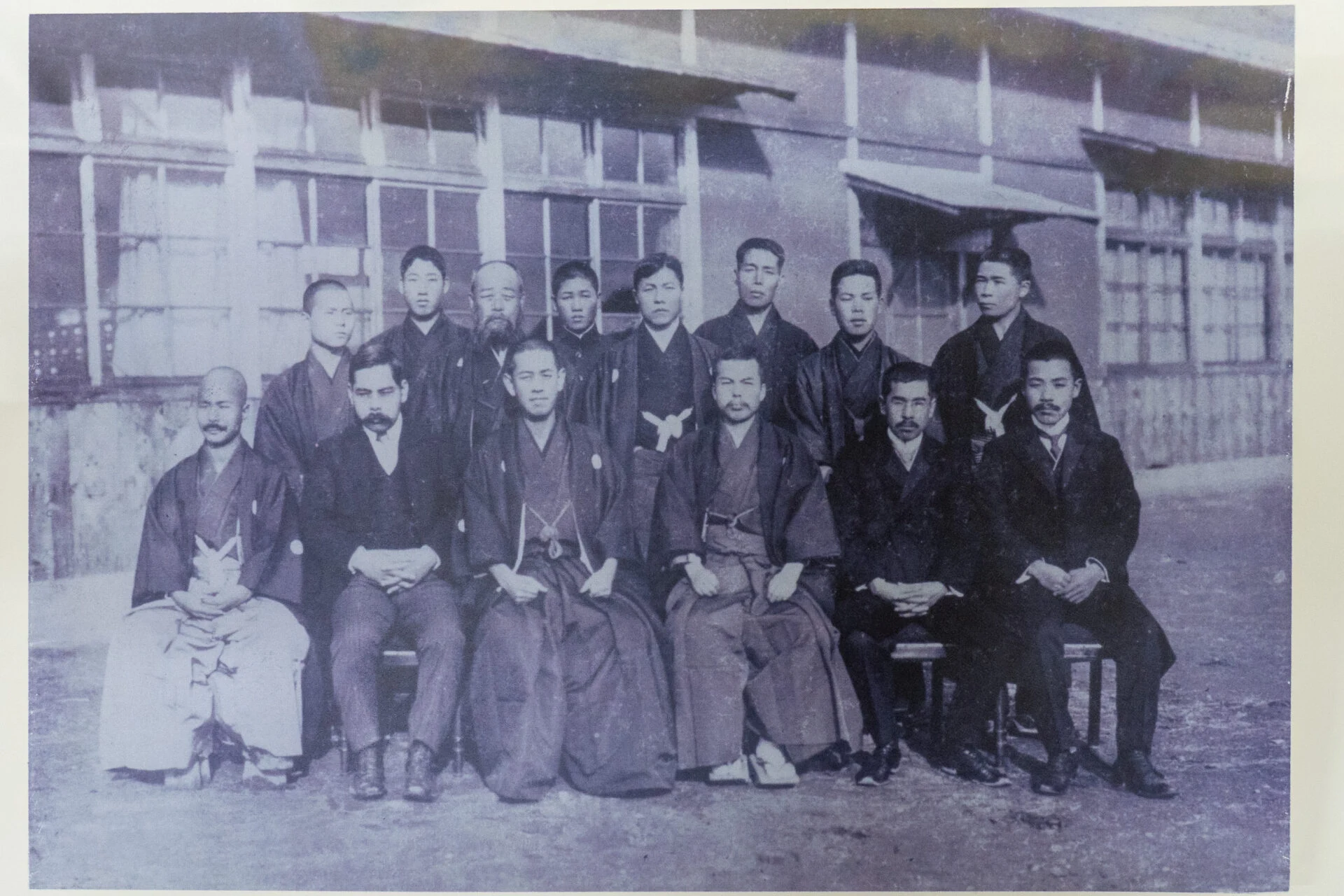
Ohara Magosaburo (third from the left in the front row) Koyama Masuta (third from the left in the back row)
After that, it is said that Ohara Magosaburo and Soichiro used fruits as gifts during the summer. Additionally, to commemorate Koyama Masuta's achievements, Ohara Magosaburo named a place Rakuzan-en after Koyama Masuta's nickname (also known as "Gakuzan"), and the fruit wrapping paper was designed by Kojima Torajiro.
From this, it can be inferred that the Ohara family was the first to brand white peaches as a specialty product of Okayama.
Incidentally, Koyama Masuta also researched the cultivation methods for pears and grapes in Tottori. He was passionate about cultivating fruits suited to the land.
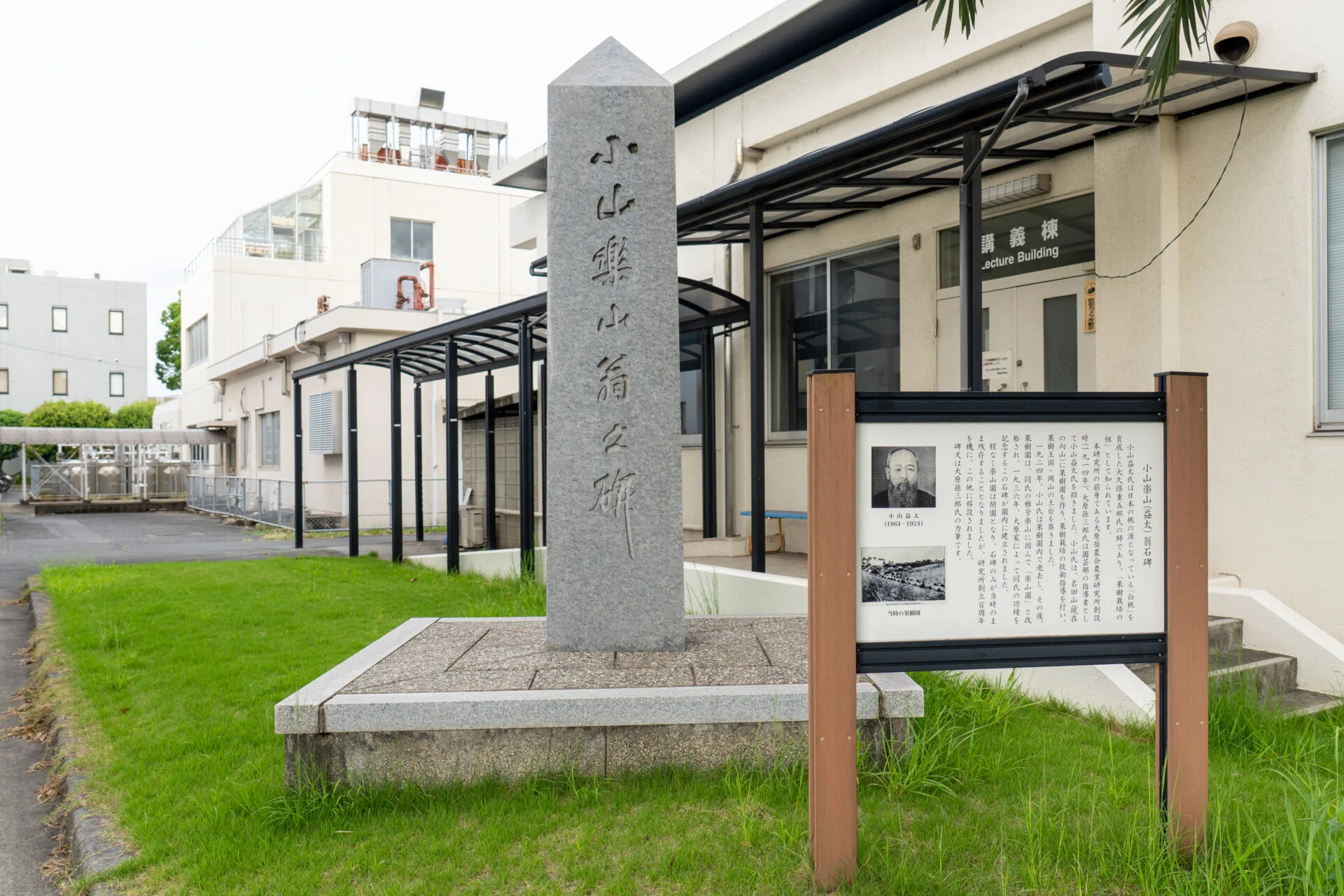
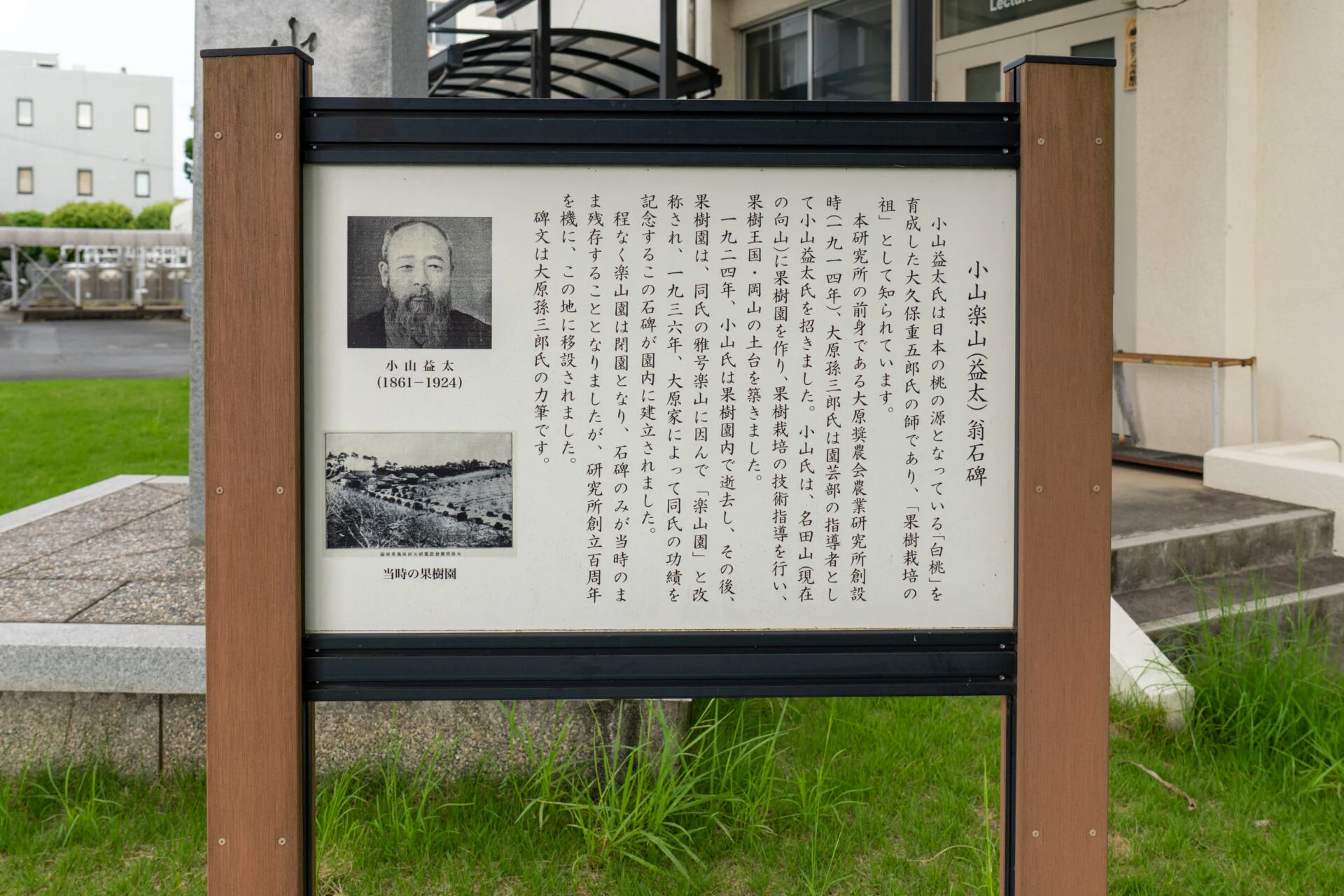
Additionally, Junichiro Watanabe from Kasaoka and Encho Nagao were also enthusiastic about variety improvement. Encho, a monk at Chofuku-ji Temple in Kasaoka, was said to be called the "Peach Monk". He was creating hard peaches of local varieties for export and canning, and even now, Tamashima is active in peach cultivation.
It is interesting that both the cultivation of local varieties in Tamashima and the trend of variety improvement existed in Okayama.
Current Peaches in Okayama
Recently, new varieties are being born one after another.
Ban
Currently, Okayama is promoting white peaches, but there is a rich history behind this. Variety improvement is still ongoing.
After variety improvement, it takes years to stabilize and fix the same characteristics over three or four generations. It takes many years to create a new variety.
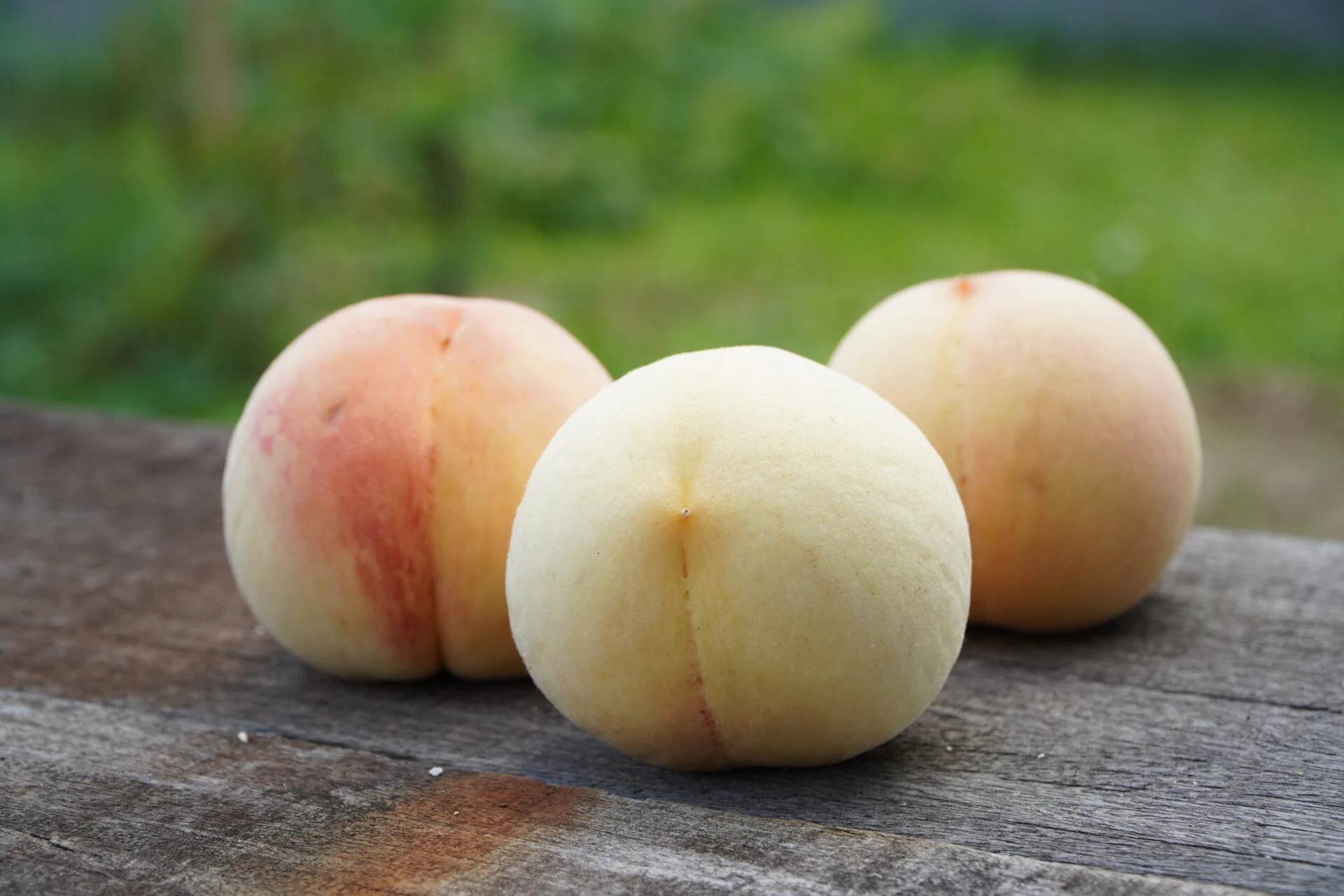
Sometimes, European peaches are crossed. European peaches originally came from China via the Silk Road, but they are darker in color compared to white peaches. White peaches can turn slightly pink when exposed to sunlight, but they do not become as red as that.
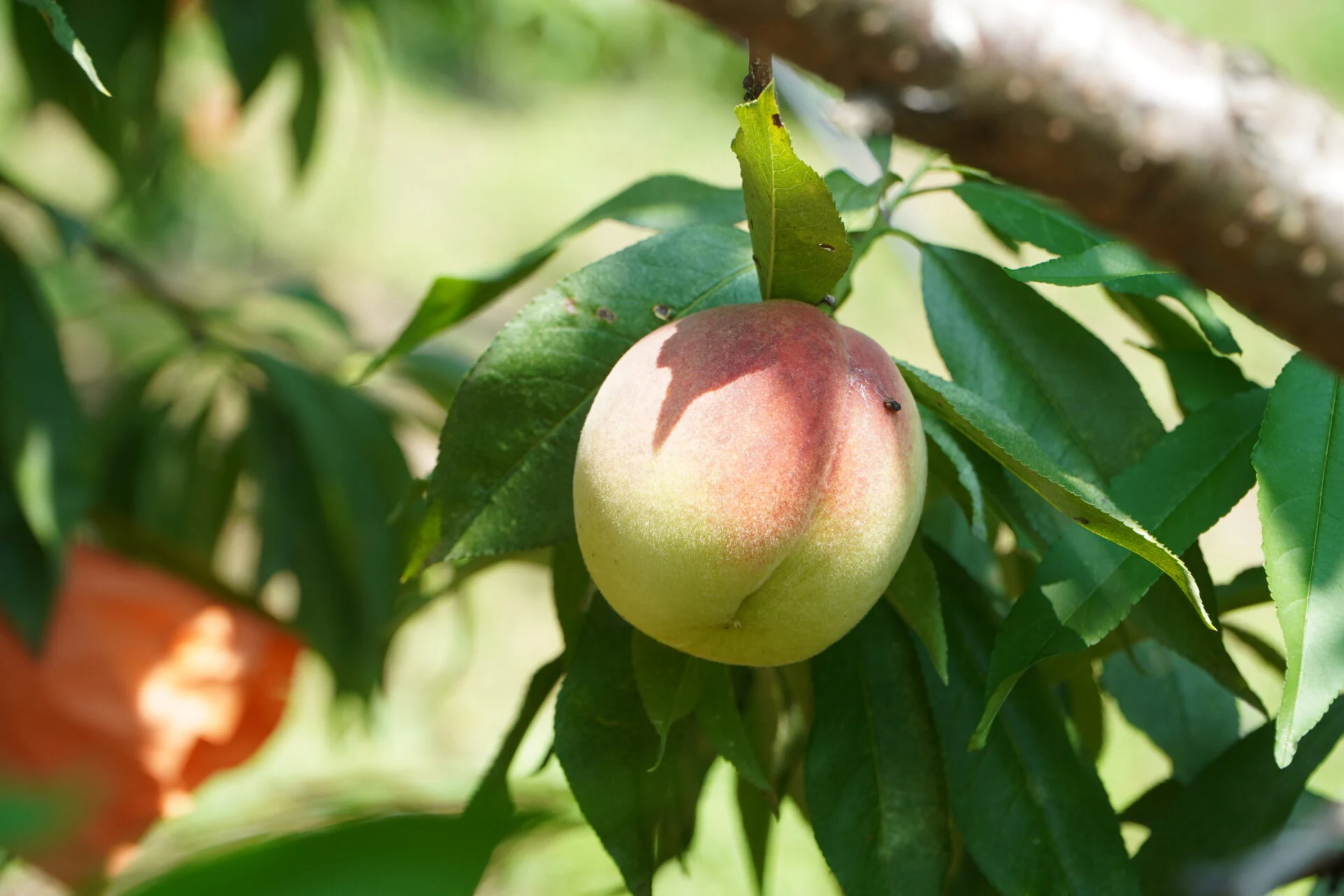
Additionally, one variety is harvested in about two weeks.
To ensure continuous harvesting of peaches, there must be varieties that bear fruit at different times.
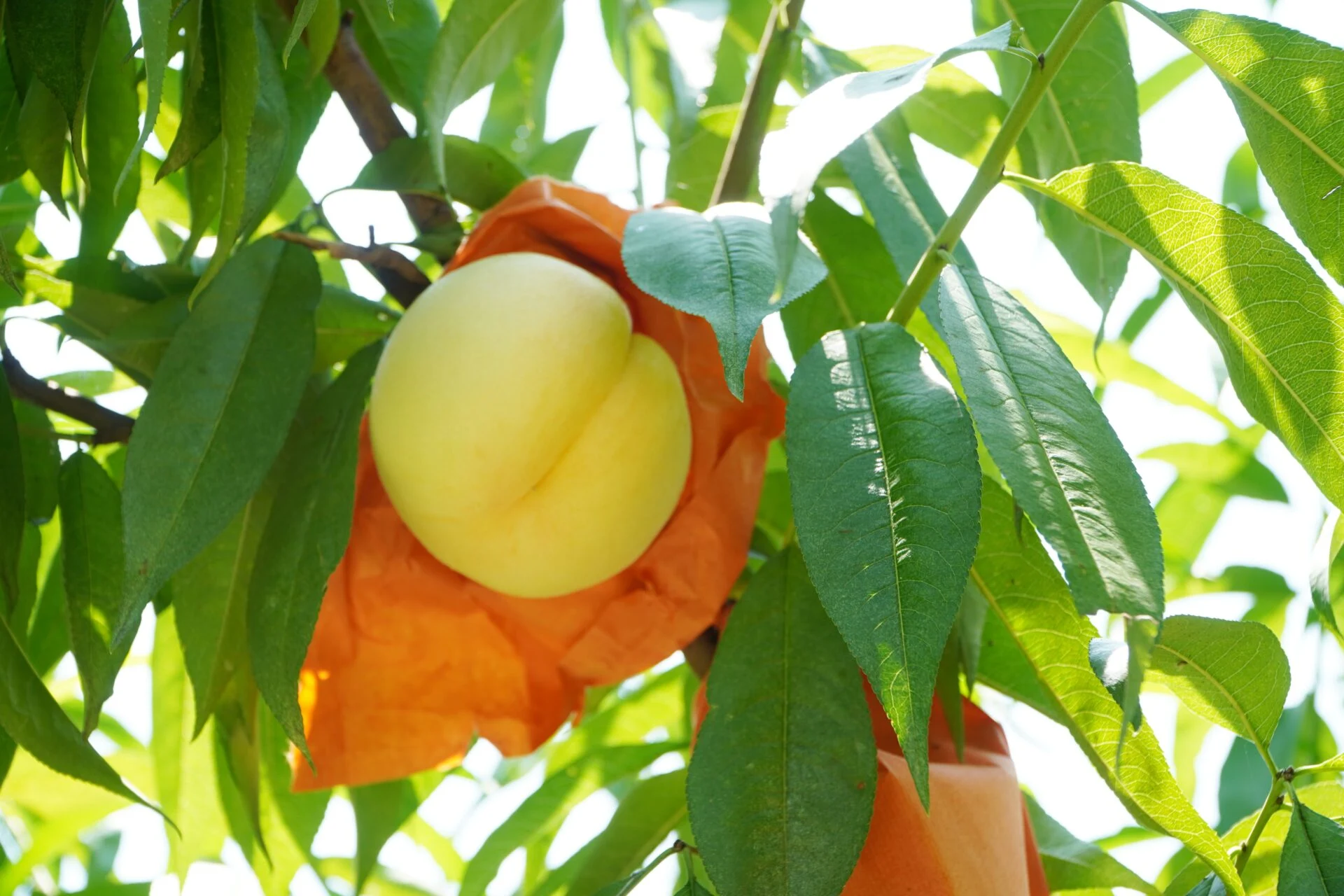
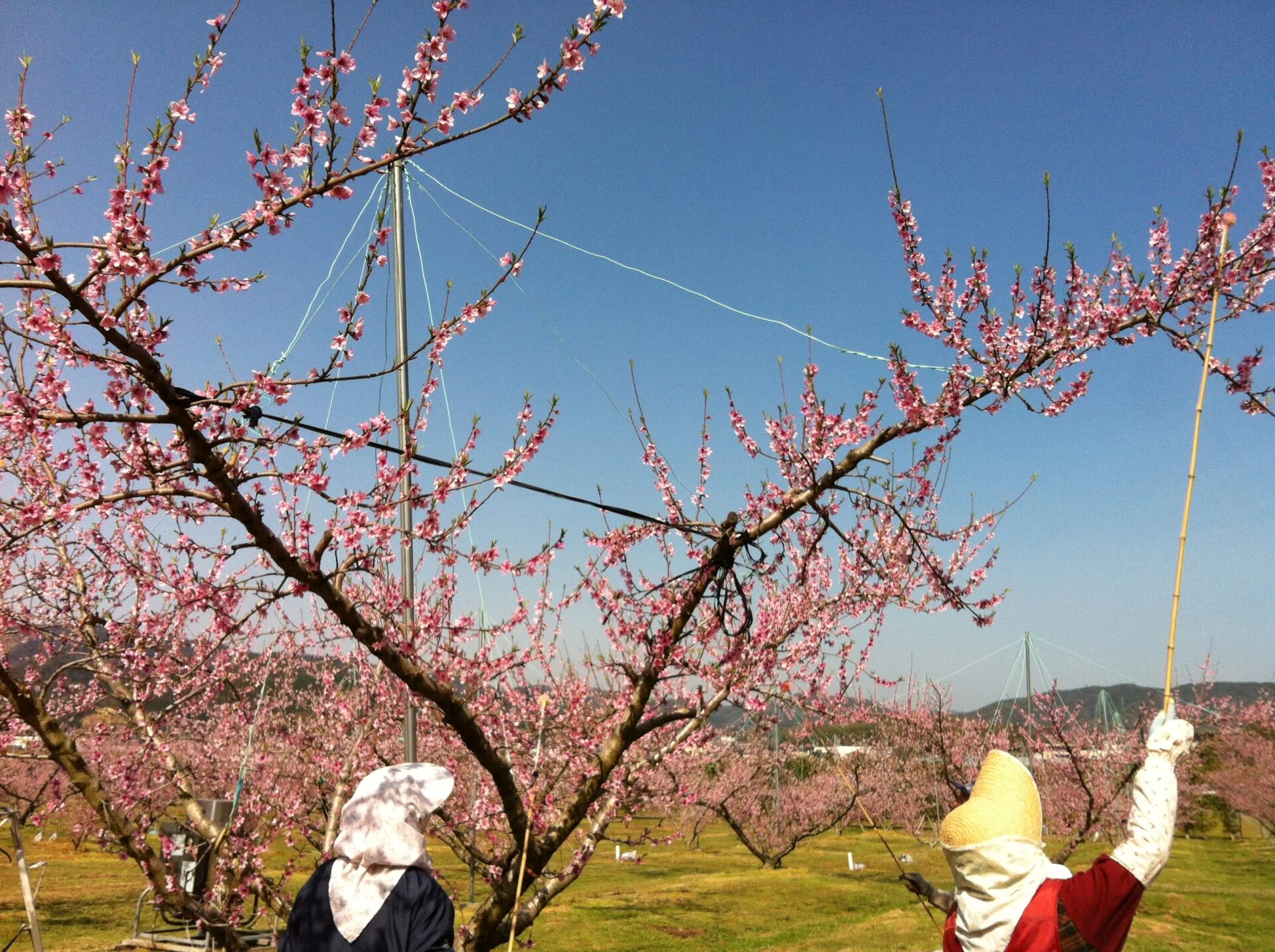
Okayama peaches are cultivated so that they can be harvested while walking with the branches kept low. In some regions, it is decided to keep up to 500 fruits on one tree, and all the rest are thinned out, allowing them to grow larger.
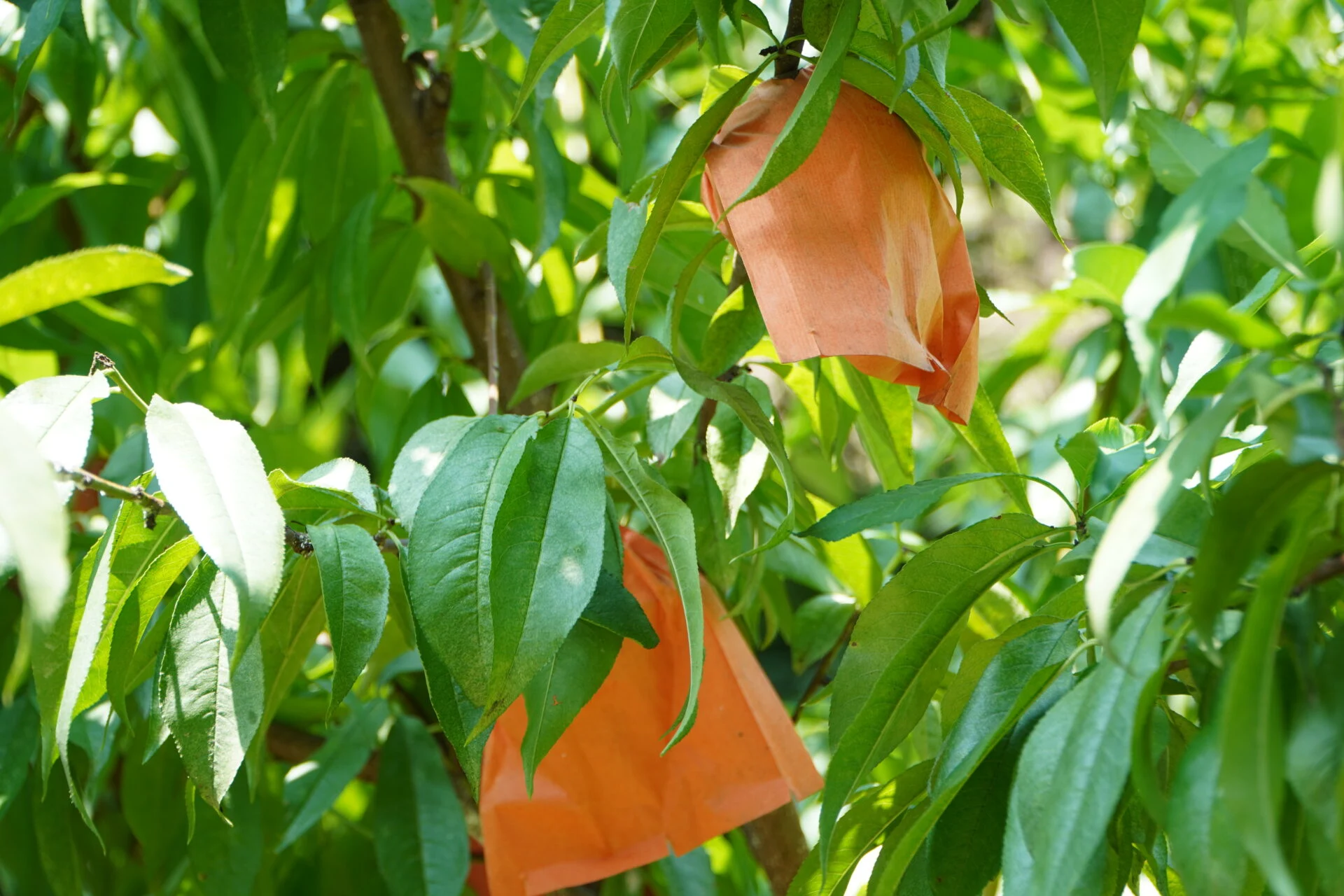
Furthermore, to prevent sunburn, bags are intentionally used to provide shade.
Okayama's white peaches, despite having the most sunlight in Japan, have the luxury of intentionally blocking rich light.
In Okayama, it seems that the whiter the peach, the better, similar to the concept of skin whitening.
Conclusion
For the author, who was born and raised in Okayama, peaches are something familiar, and the existence of Momotaro feels natural.
However, I had never deeply considered why peaches are a specialty product, or why Okayama is associated with Momotaro.
Through this research, I learned that there might be a historical connection between the divine thought of peaches and the discovery of peach seeds at archaeological sites, leading to the story of "Momotaro born from a peach."
Furthermore, the existence of individuals like Koyama Masuta and Okubo Shigegoro was essential for Okayama to become a major production area for peaches.
Whether the Japan Heritage "Momotaro Legend" was born by chance or necessity is a fascinating aspect of history that I was able to experience through this research.
While eating the white and smooth peaches from Okayama, it might be nice to reflect on the history and archaeological sites related to the "Momotaro Legend."
Articles on Japan Heritage in Kurashiki City














Nanba Farm