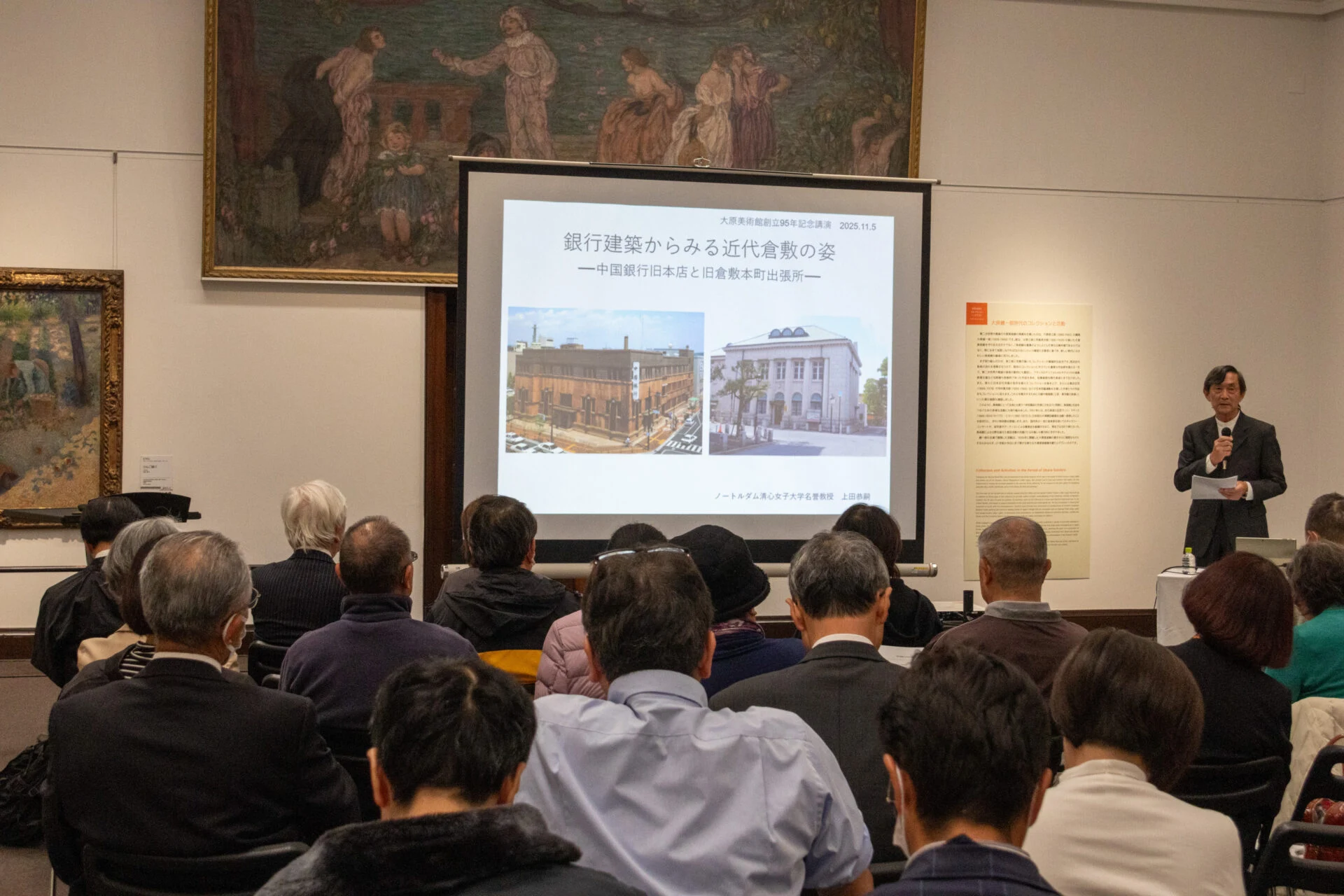
Opened in 1930, Ohara Museum of Art is celebrating its 95th anniversary this year (2025).
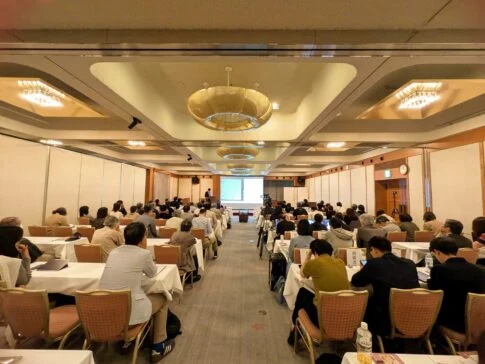
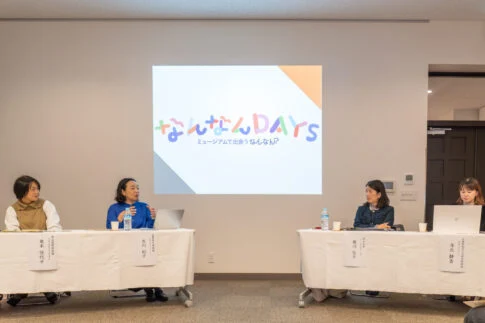
On the anniversary of its opening, November 5, 2025, a commemorative lecture titled "The Modern Face of Kurashiki Seen Through Bank Architecture" was held in Room 2 of the main building of Ohara Museum of Art.
This report covers the lecture focusing on "bank architecture" by architect Yakushiji Kazue.
Overview of the Lecture
This lecture was conducted in two parts, focusing on two bank buildings: the Kojima Torajiro Memorial Gallery (formerly Chugoku Bank Kurashiki Honmachi Branch) and the former head office of Chugoku Bank.
- On the history of bank architecture
- On the history of Chugoku Bank Kurashiki Honmachi Branch
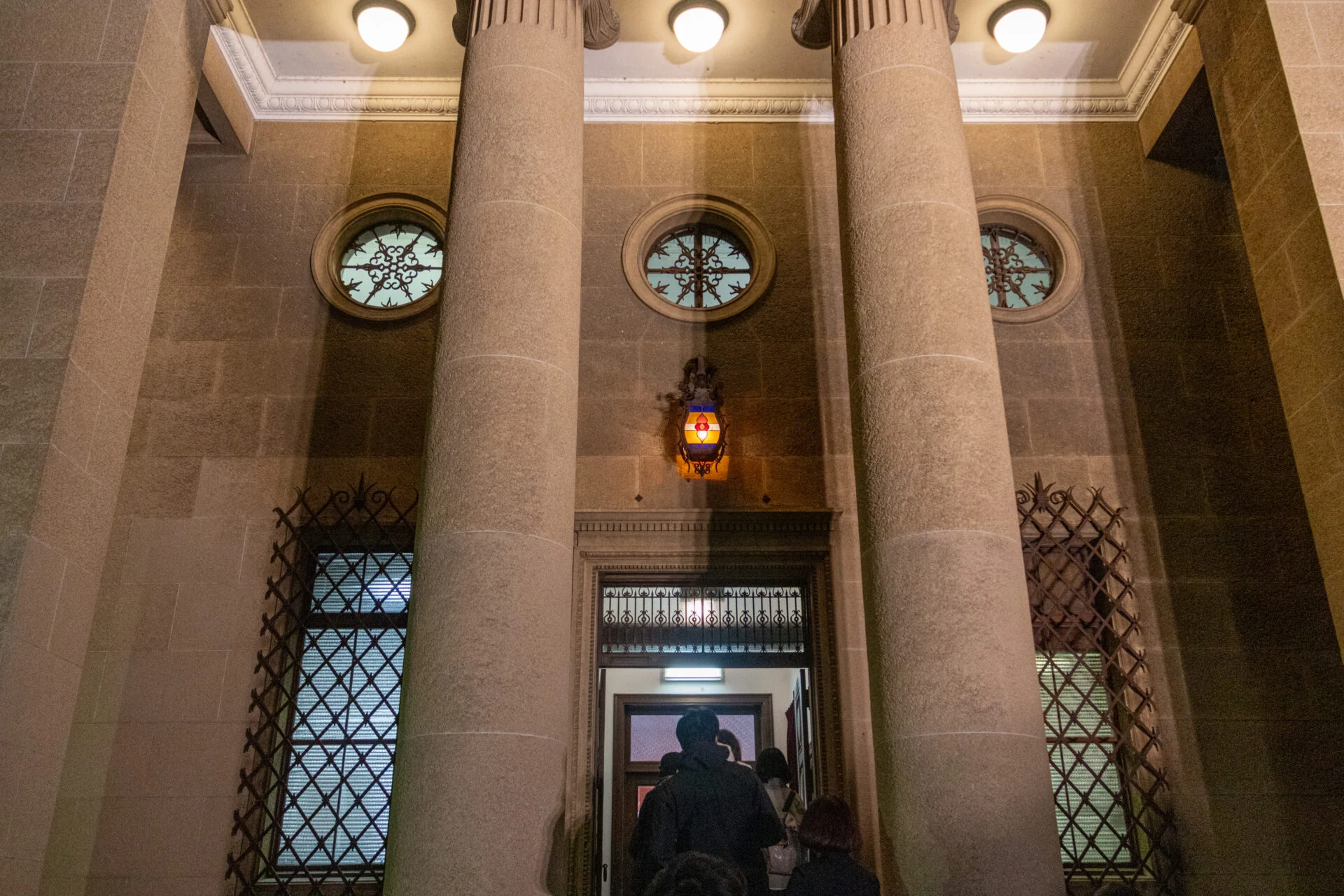
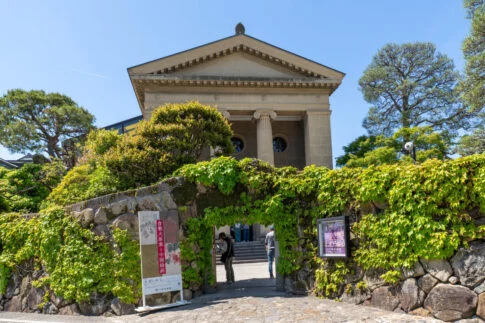
The main building of Ohara Museum of Art, which served as the venue, is also known as a representative work of Yakushiji Kazue.
Ohara Museum of Art and the First National Bank, one of the predecessors of Chugoku Bank, were both established by Ohara Magosaburo, creating a connection that led to a collaborative lecture between Ohara Museum of Art and Chugoku Bank.

Introduction of the Speaker
The keynote speaker was Professor Emeritus Ueda Yasutsugu of Notre Dame Seishin University.
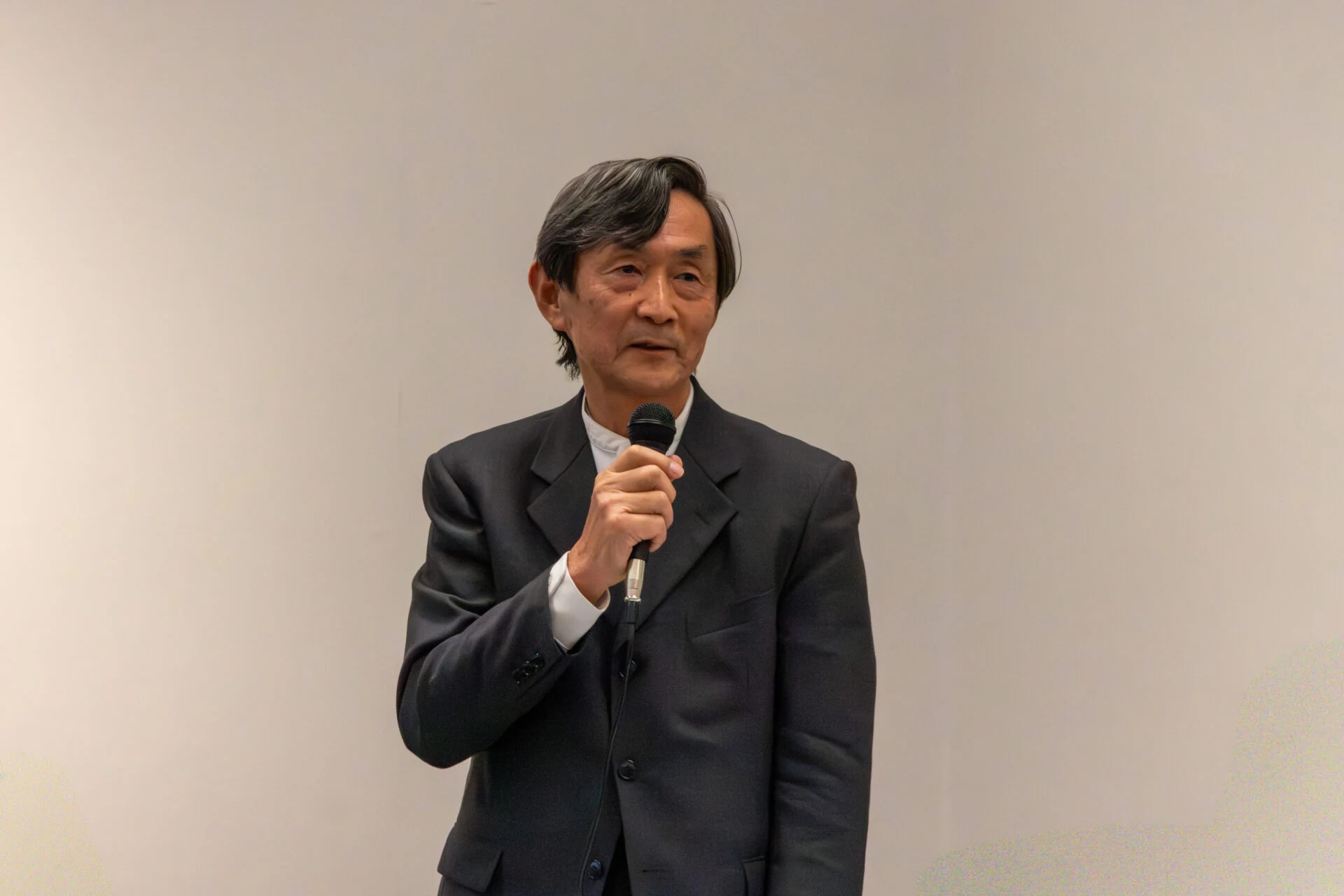
Professor Ueda is a leading authority on Yakushiji research and has authored numerous related publications. In this lecture, he introduced some of the results of his long-term research.
The guest speaker was Kiyota Satoshi, the branch manager of Chugoku Bank Kurashiki Branch, who introduced the history of Chugoku Bank and Kurashiki Honmachi Branch.
Architect Yakushiji Kazue, Appointed by the Emperor
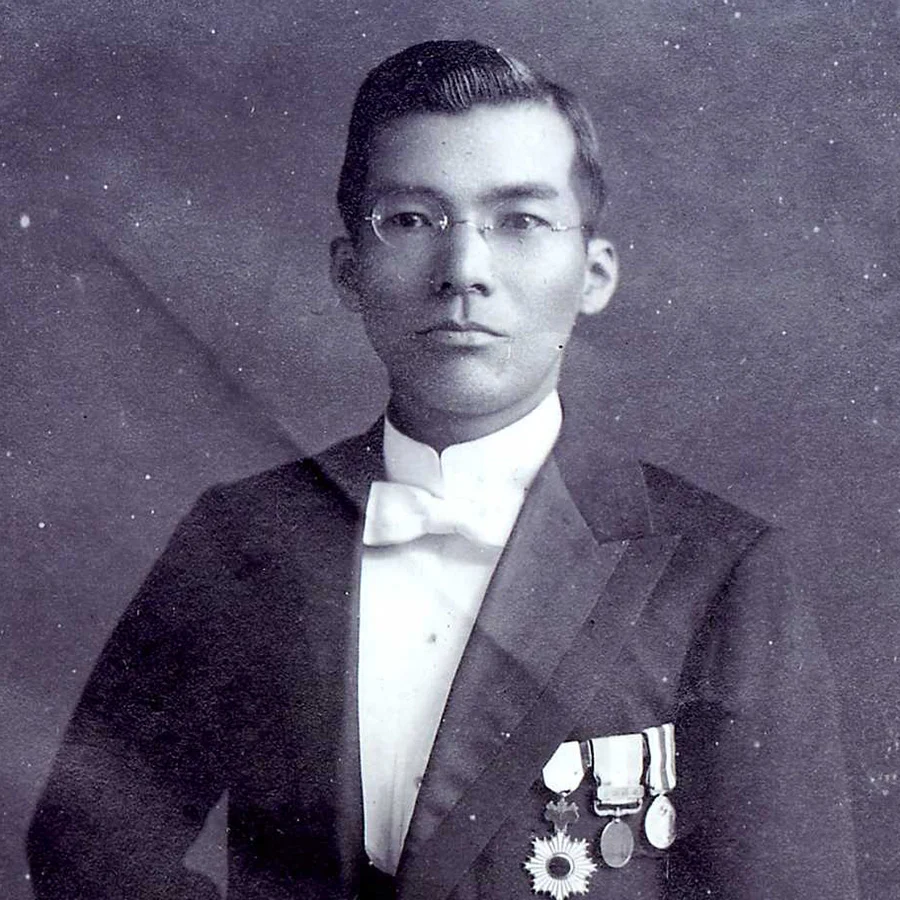
Yakushiji Kazue was born in 1884 in what is now Soja City. He graduated from the Department of Architecture at the Imperial University of Tokyo and worked as a construction engineer for the Army Ministry.
At that time, many military facilities were simple buildings, so he traveled to Europe and the United States from 1921 to 1923 to inspect modern military facilities.
Part of the travel expenses was supported by Ohara Magosaburo, and in addition to inspecting military facilities, he also inspected cutting-edge textile industries, banks, and hospitals.
After returning from his trip to Europe and the United States, the Great Kanto Earthquake occurred on September 1, 1923.
As military facilities were also affected by the earthquake, Yakushiji demonstrated his skills as a construction engineer for reconstruction efforts.
Due to his achievements and the recommendation of Kazushige Ugaki, the Army Minister from Okayama Prefecture, he was appointed as a technical engineer by imperial decree in November 1924.
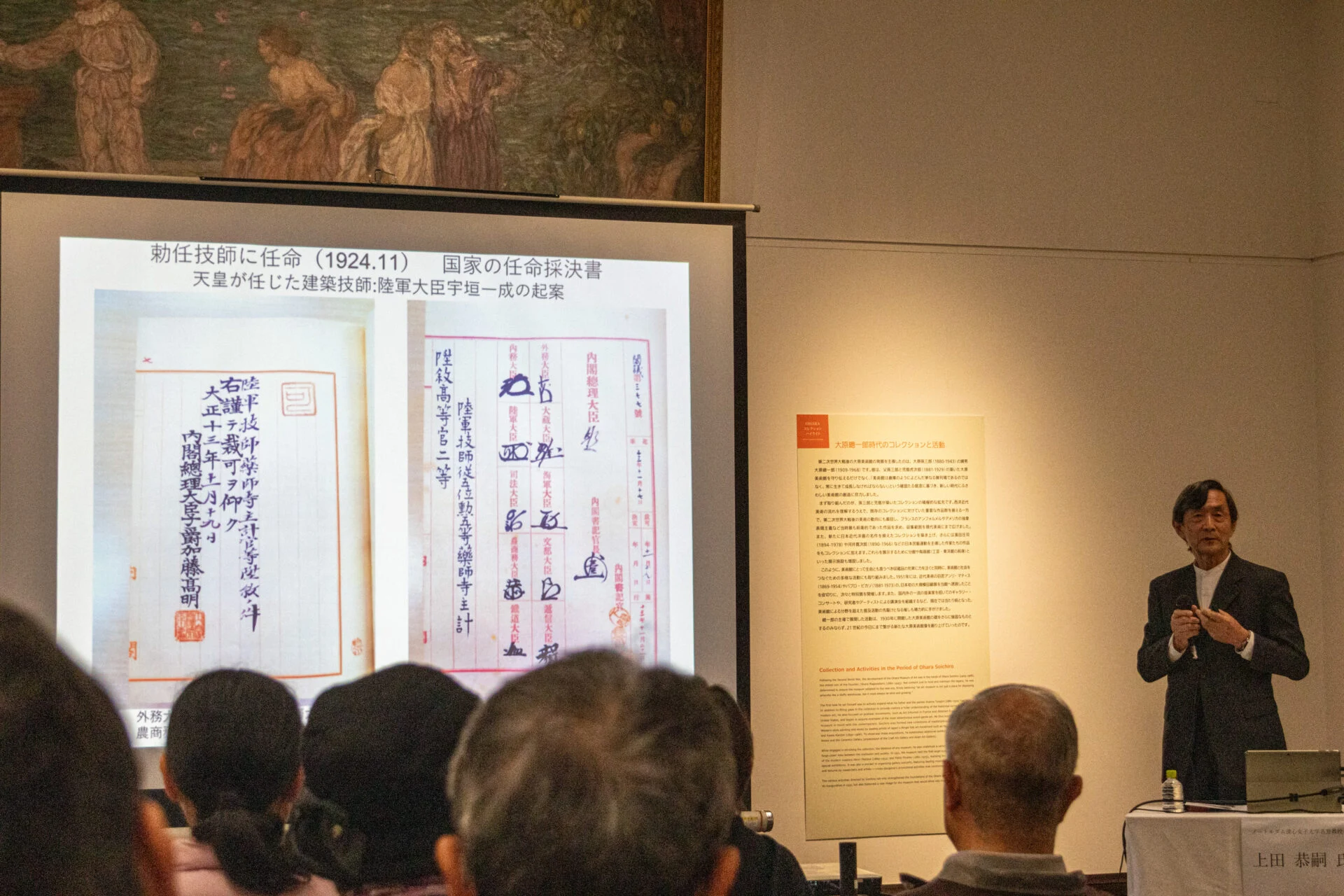
This was the first time for an active engineer within the Army Ministry, and it is the reason why Yakushiji is referred to as a "architect appointed by the Emperor."
However, due to the system at the Army Ministry at the time, civil servants who graduated from the Imperial University could not hold important positions, leading him to return to his hometown at the invitation of Ohara Magosaburo.
In the Army Ministry, civil servants were those who graduated from institutions like the Imperial University, distinguishing them from military officers who graduated from the Army War College.
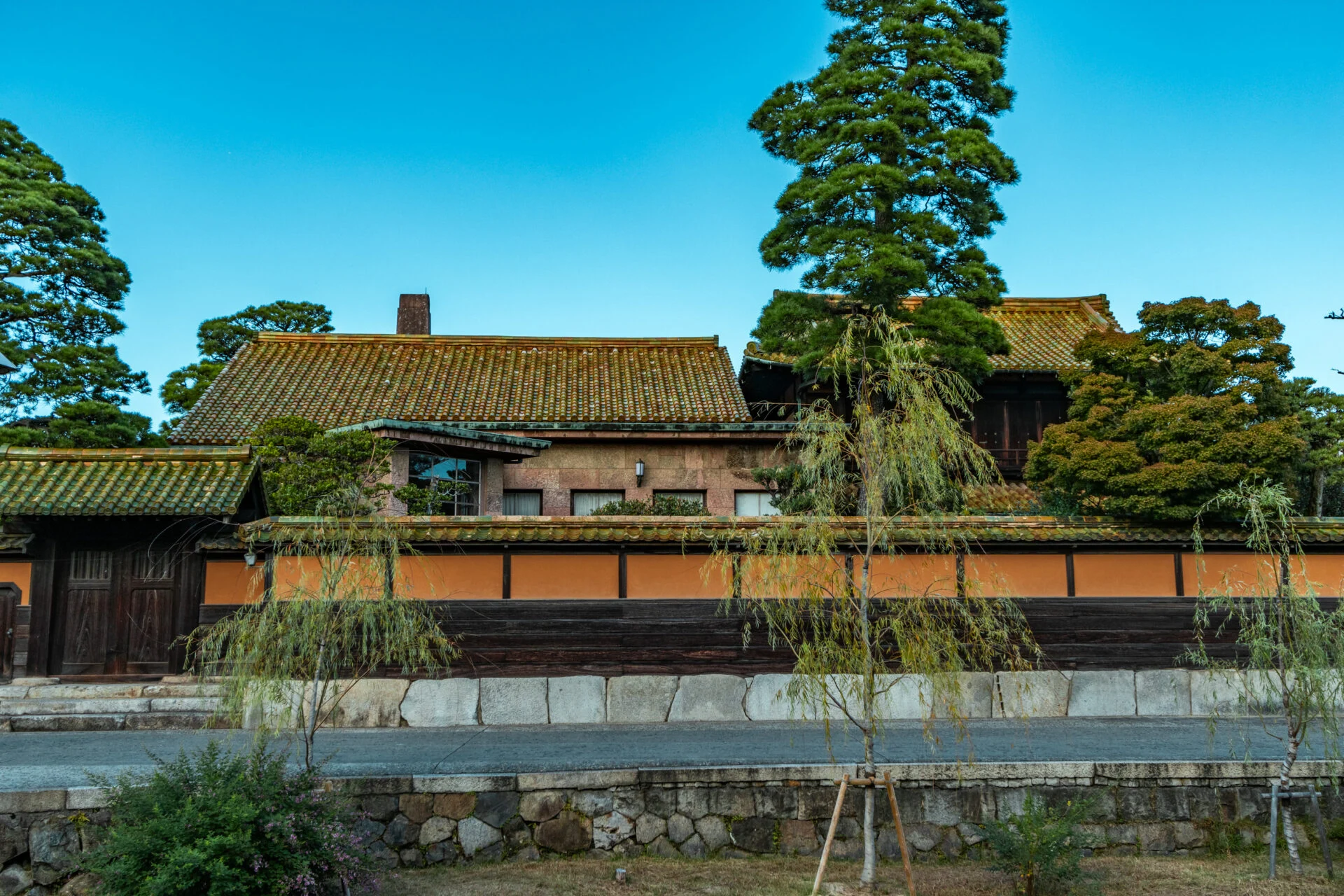
After returning home in 1926, he took office as a director at Kurashiki Silk Textile Co., Ltd. (now Kuraray).
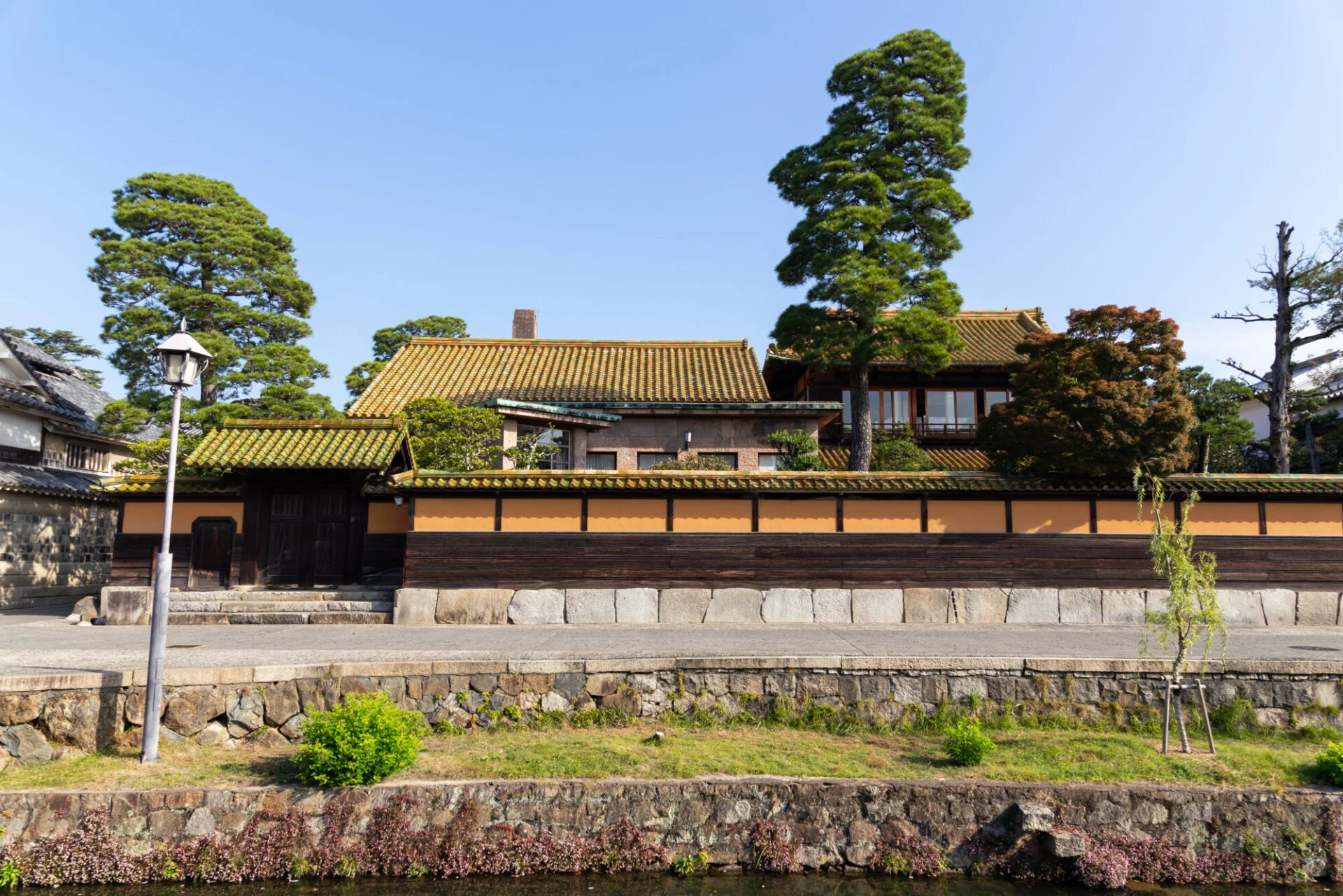
He designed many facilities related to the Ohara family, including the main building of Ohara Museum of Art and Yurin-so Villa, and laid the foundation for the development of Kurashiki that continues to this day alongside Ohara Magosaburo.
Bank Architecture by Yakushiji Kazue and Its Era
This section introduces the bank architecture designed by Yakushiji and contemporary bank architecture mentioned in the lecture.
First National Bank Kurashiki Branch (now: Kojima Torajiro Memorial Gallery)
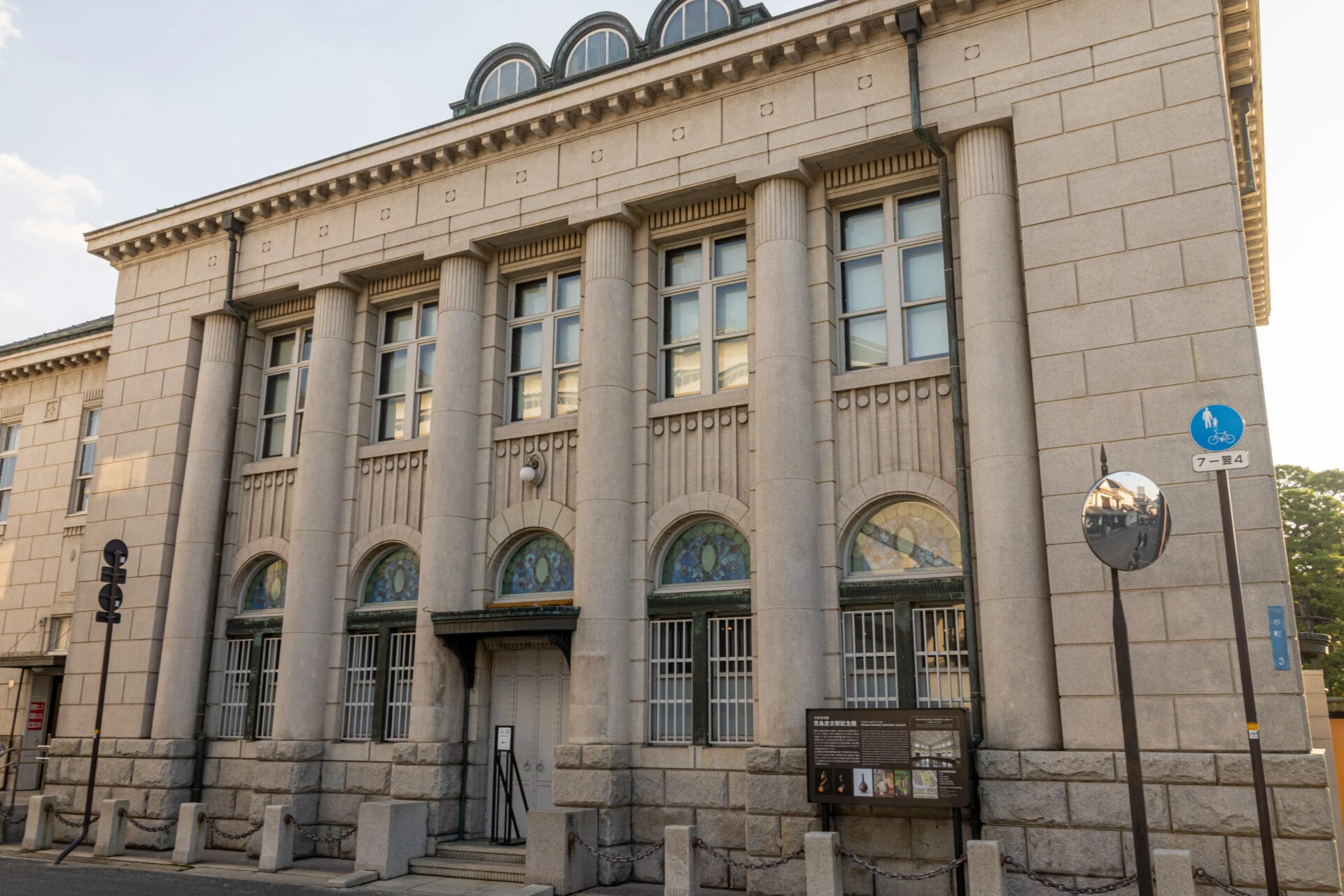
This building, located in a corner of the Bikan Historical Area, was completed in 1922 as the Kurashiki branch of the First National Bank (now Chugoku Bank).
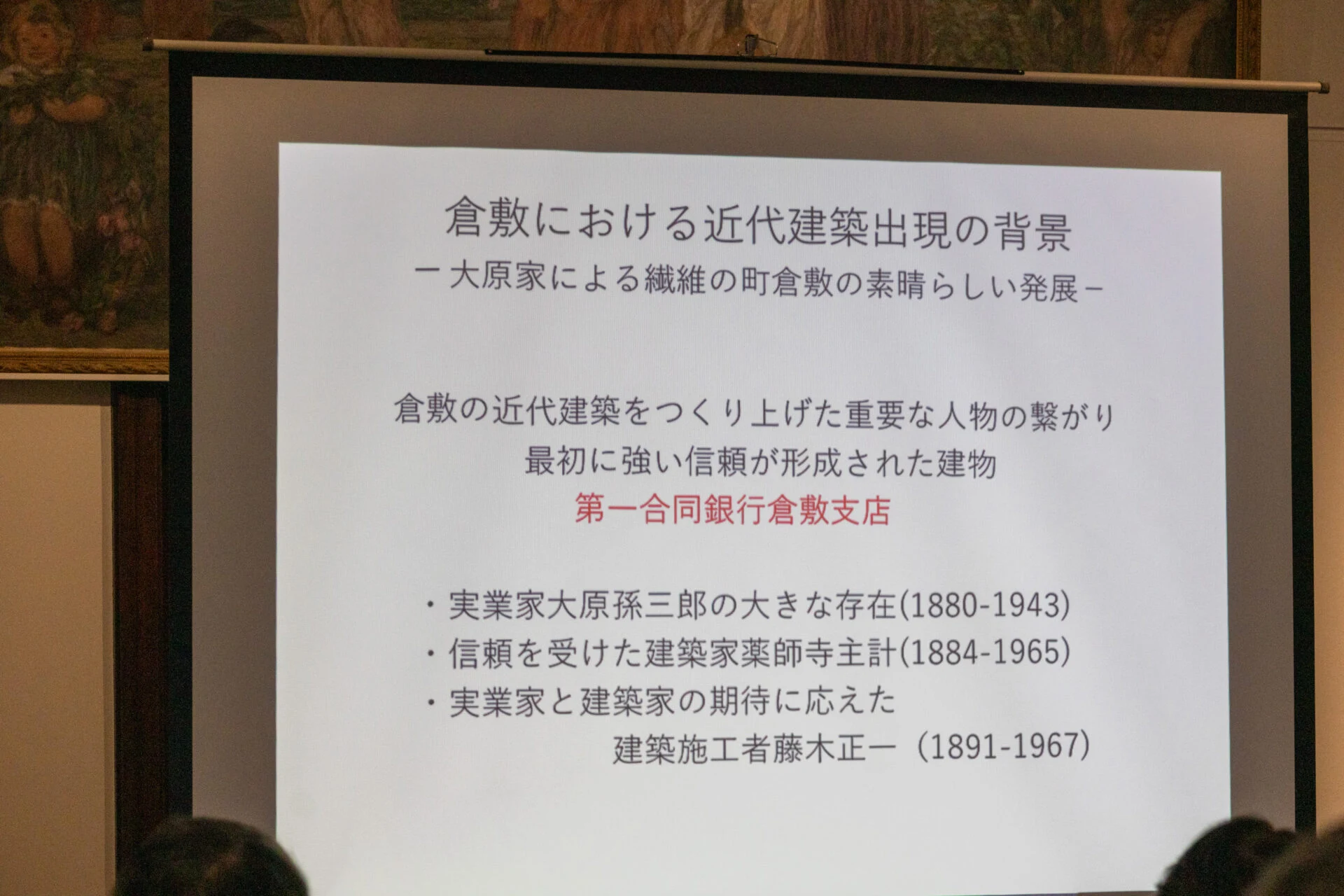
The client, Ohara Magosaburo, commissioned Yakushiji for the design and Masao Fujiki, who established Fujiki Construction Company, for the construction.
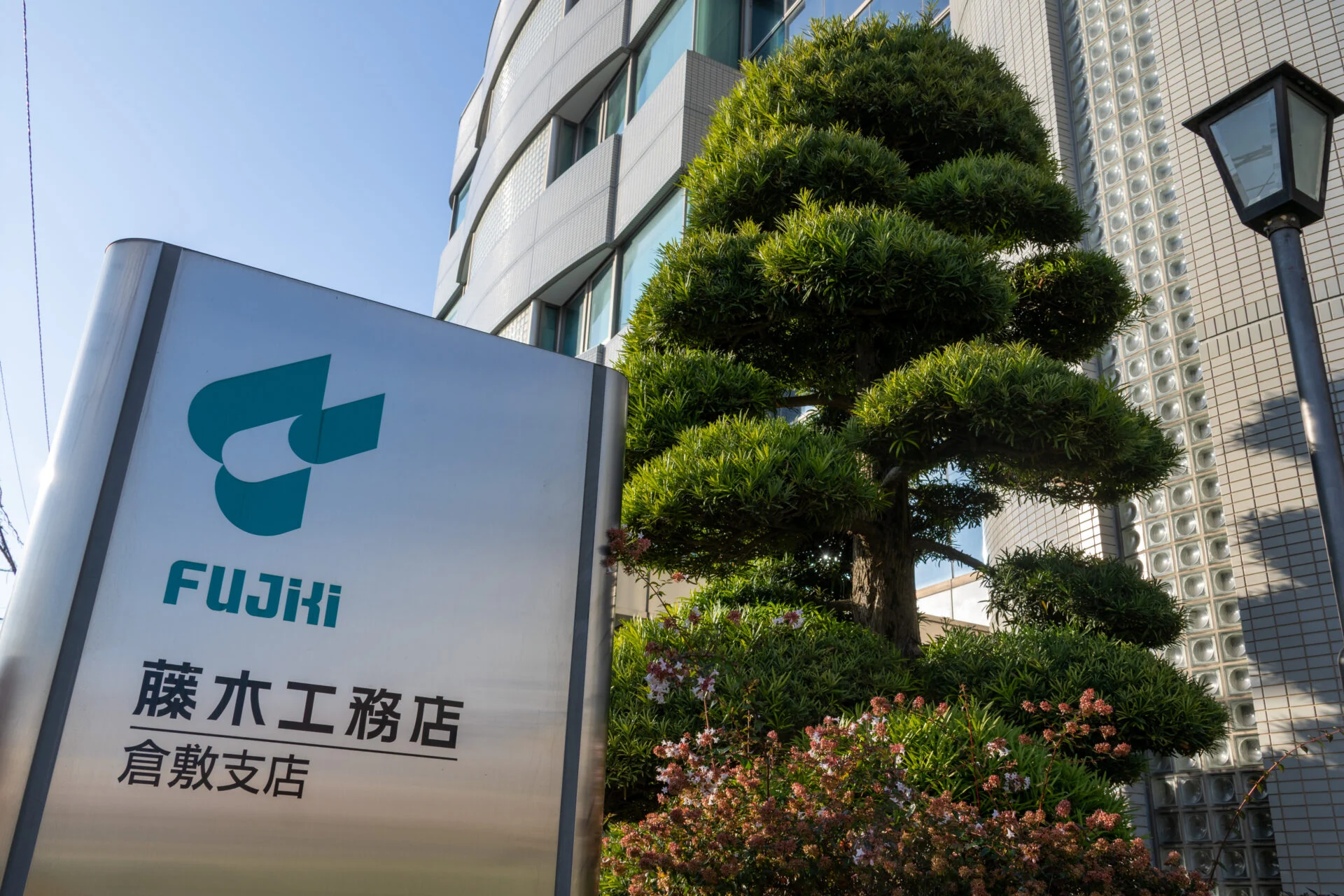
Fujiki Construction Company, which still has a branch in Kurashiki, has constructed many buildings related to the Ohara family and many others in Kurashiki City. The origin of modern architecture in Kurashiki lies in this bank building.
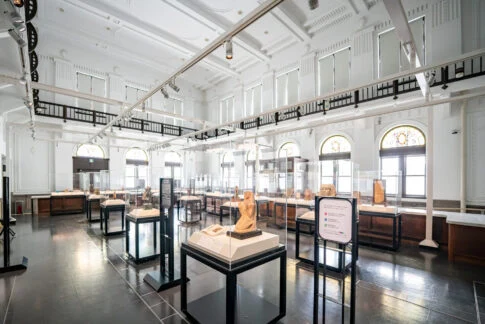
This building is characterized by modern architecture using iron, concrete, and glass, featuring a semi-circular window with stained glass, incorporating Renaissance-style design.
It is speculated that Yakushiji considered the connection to the "Medici family" in Florence, Italy, where the Renaissance style originated.
The Medici family amassed wealth through finance and supported artists like Michelangelo as patrons, thereby supporting the Renaissance. Professor Ueda stated:
"As an architect serving the Ohara family, I believe he infused his design with the hope that the Ohara family would prosper like the Medici family in their banking endeavors."
The building was used as Chugoku Bank Kurashiki Honmachi Branch until 2016, but with the end of banking operations, it was transferred to Ohara Museum of Art and repurposed as a museum.
After renovations, it has been open to the public since April 2025 as the Kojima Torajiro Memorial Gallery.
Former Head Office of Chugoku Bank

Yakushiji also designed the former head office of Chugoku Bank located in Okayama City. Regarding the construction episode, Professor Ueda stated:
"The former head office was completed in 1927 at the same location as the current head office of Chugoku Bank. Initially, an 8-story building was planned, which would have been an unprecedented scale for a bank building in a regional city."
However, the Central Supervision Bureau at the time rejected the plan, stating that "a bank of this size is not needed in a regional city."
Yakushiji considered the 8-story building because he intended to rent out the upper floors for income. This was said to be inspired by buildings like Marunouchi Building, which was completed in 1920 during his time at the Army Ministry.
Today, it is common to see banks located on the first floor of office buildings, but this was a novel proposal at the time.
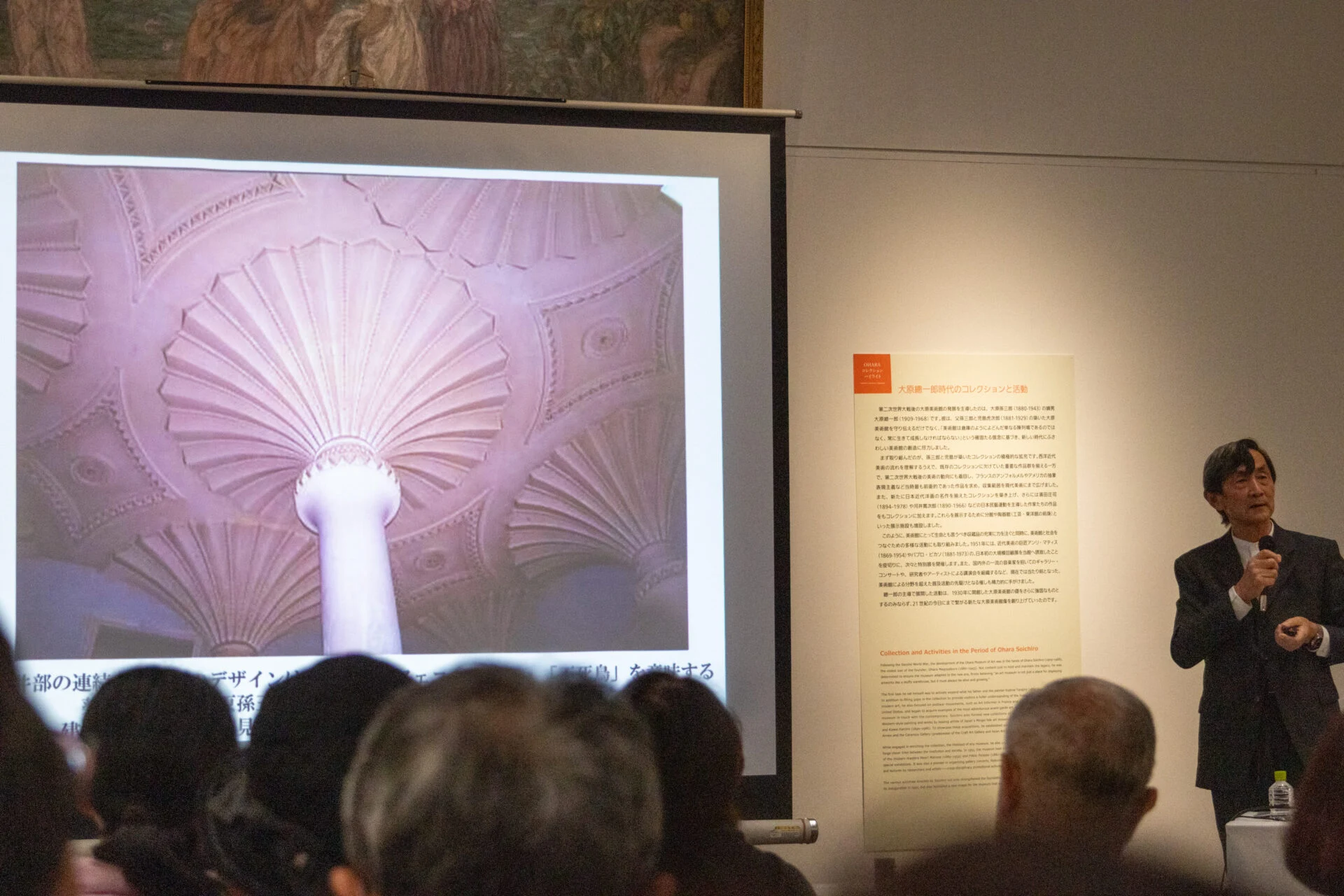
The internal columns were adorned with a magnificent design of a phoenix (palm tree), and not only was the design remarkable, but it was also said by Professor Ueda that it represented the hope that the Ohara family's banking business would prosper for a long time like a phoenix.
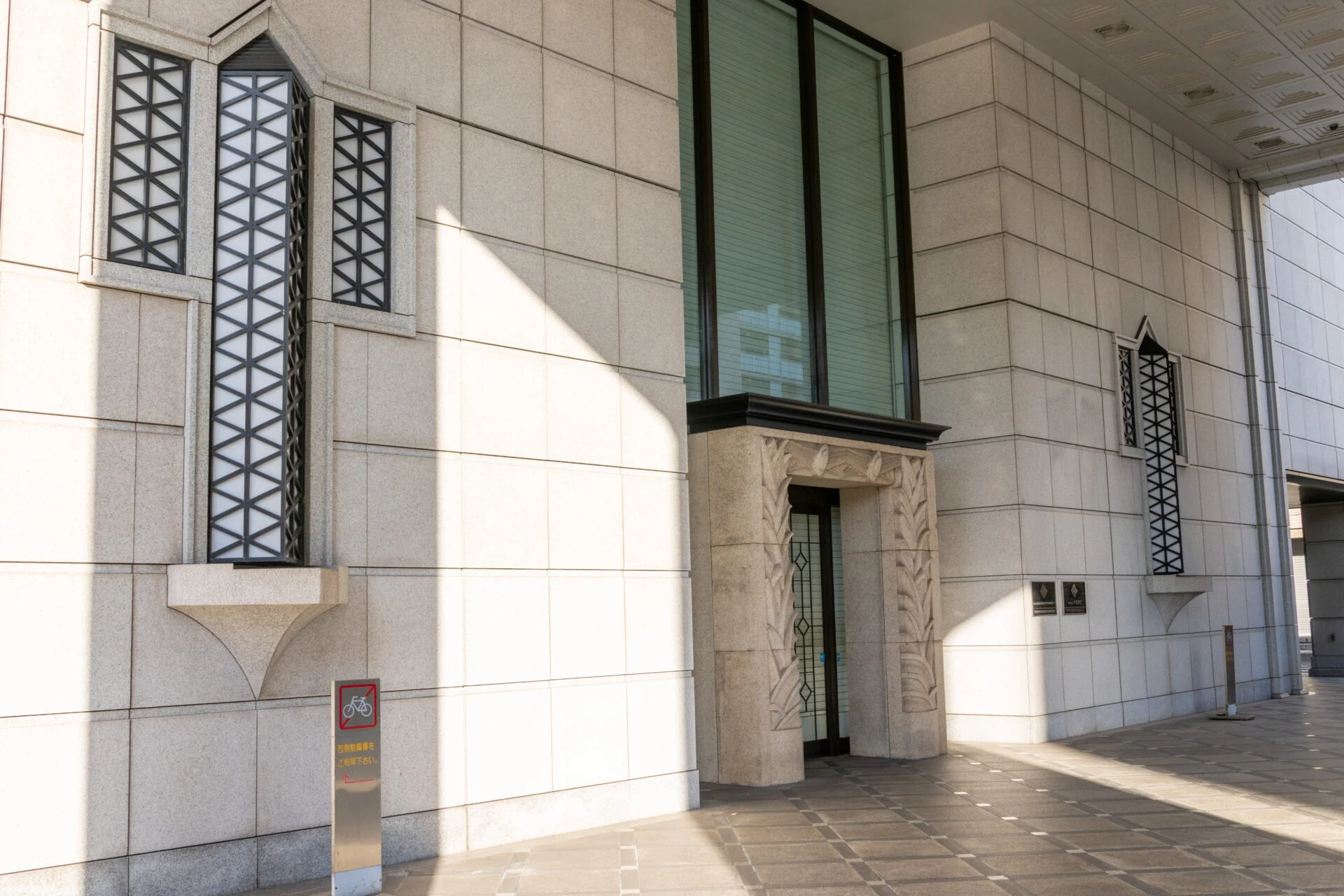
The entrance of the current main store, rebuilt in 1991, features a relief motif of aloe and window grilles preserved and reused from the old main store, evoking memories of the past.
Former Okayama Branch of the Bank of Japan (now: Runes Hall)
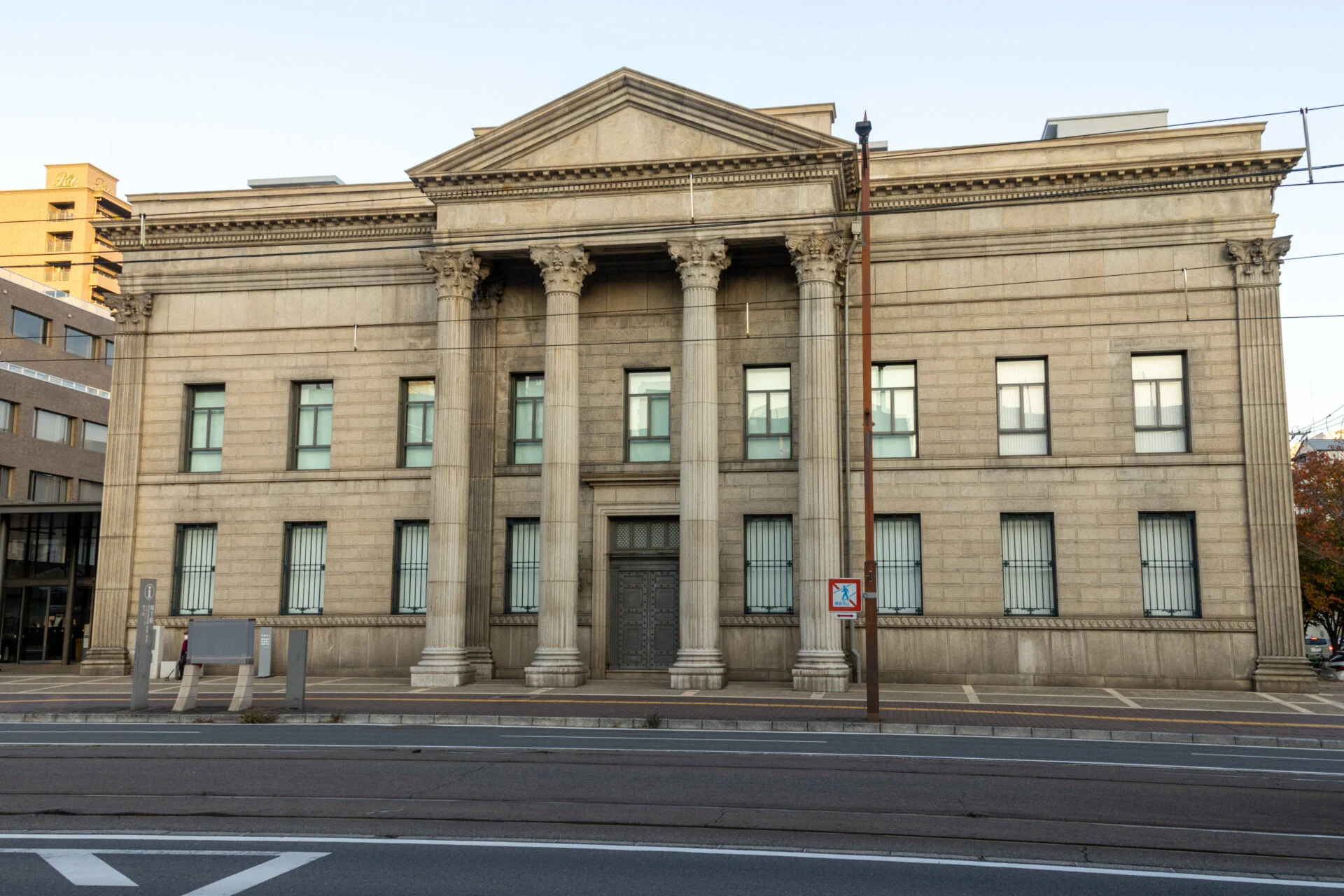
Near the former main store of Chugoku Bank, there is the former Okayama Branch of the Bank of Japan (now: Runes Hall).
This building was completed in 1922, designed by Nagano Uheiji, a master of bank architecture and a disciple of the architect Kingo Tatsuno, who is known for designing Tokyo Station.
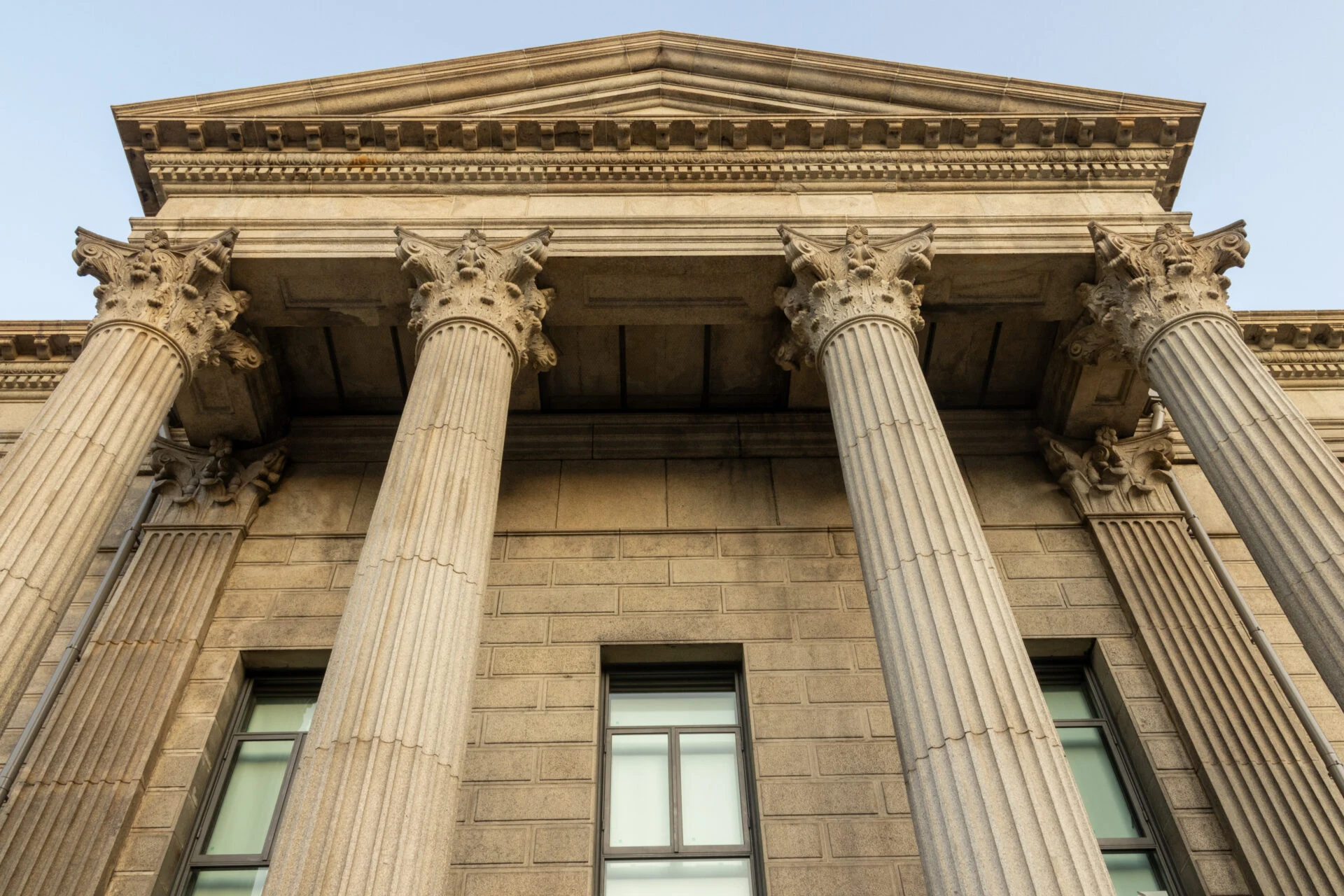
The Greek temple-style facade (front) is designated as a registered tangible cultural property, characterized by the design typical of bank architecture of the time.
The construction was handled by Fujiki Construction, which also worked on the aforementioned Kurashiki Branch of Daiichi Godo Bank.
The founder, Fujiki Shoichi, was recognized for his skills and would later take on many bank buildings, including the Kurashiki Branch of Daiichi Godo Bank.
There was also an explanation about how Yakushiji was involved in the bank branches of Chugoku Bank located in Okayama, Hiroshima, and Kagawa.
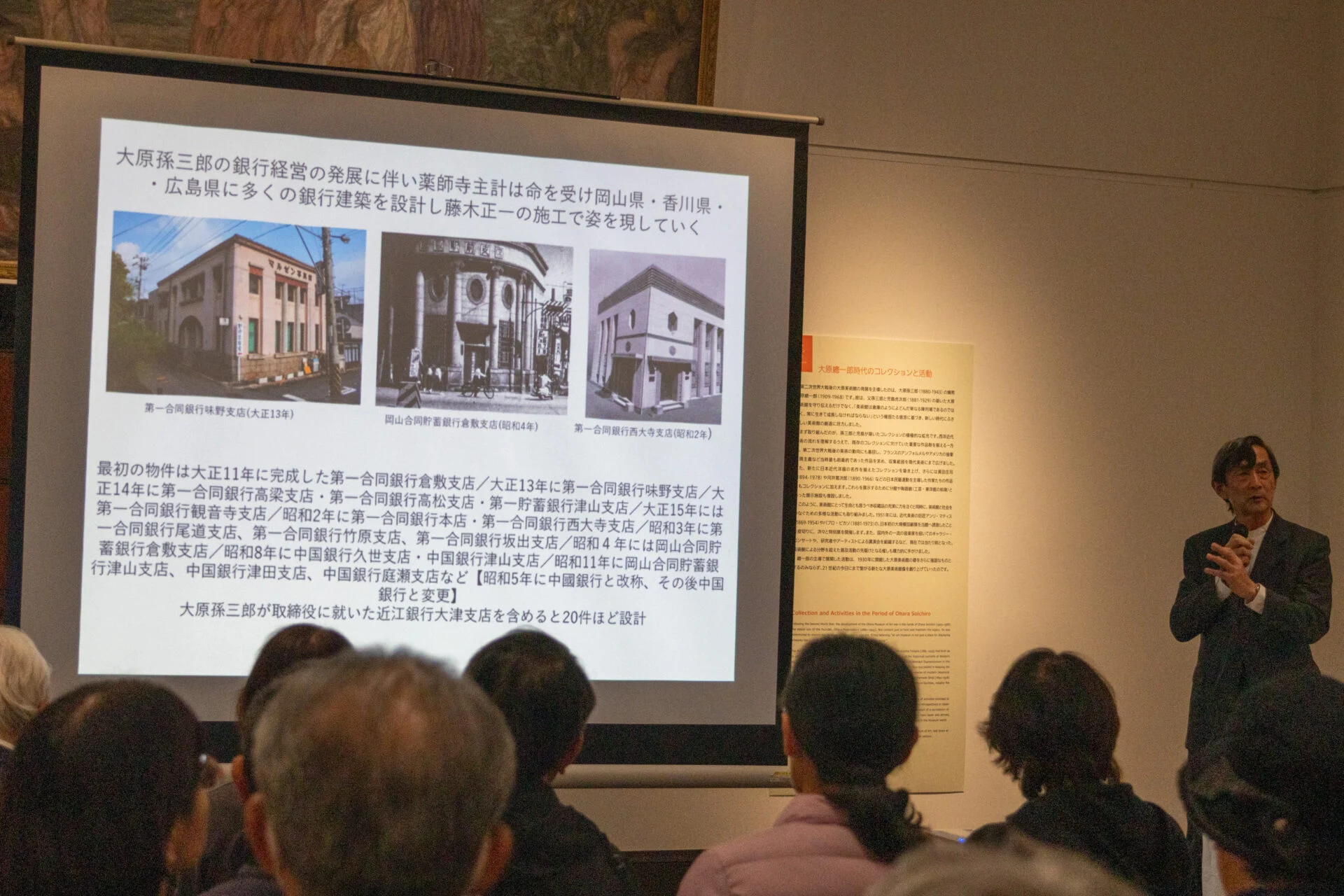
One of the buildings introduced during the lecture was the "Chugoku Bank Ajino Branch," located near Nozaki's Historical Residence in Kojima District, Kurashiki City.
Currently, a bank building designed by Yakushiji still exists and is being reused as a denim shop.
The History of Chugoku Bank and the Kurashiki Honmachi Branch
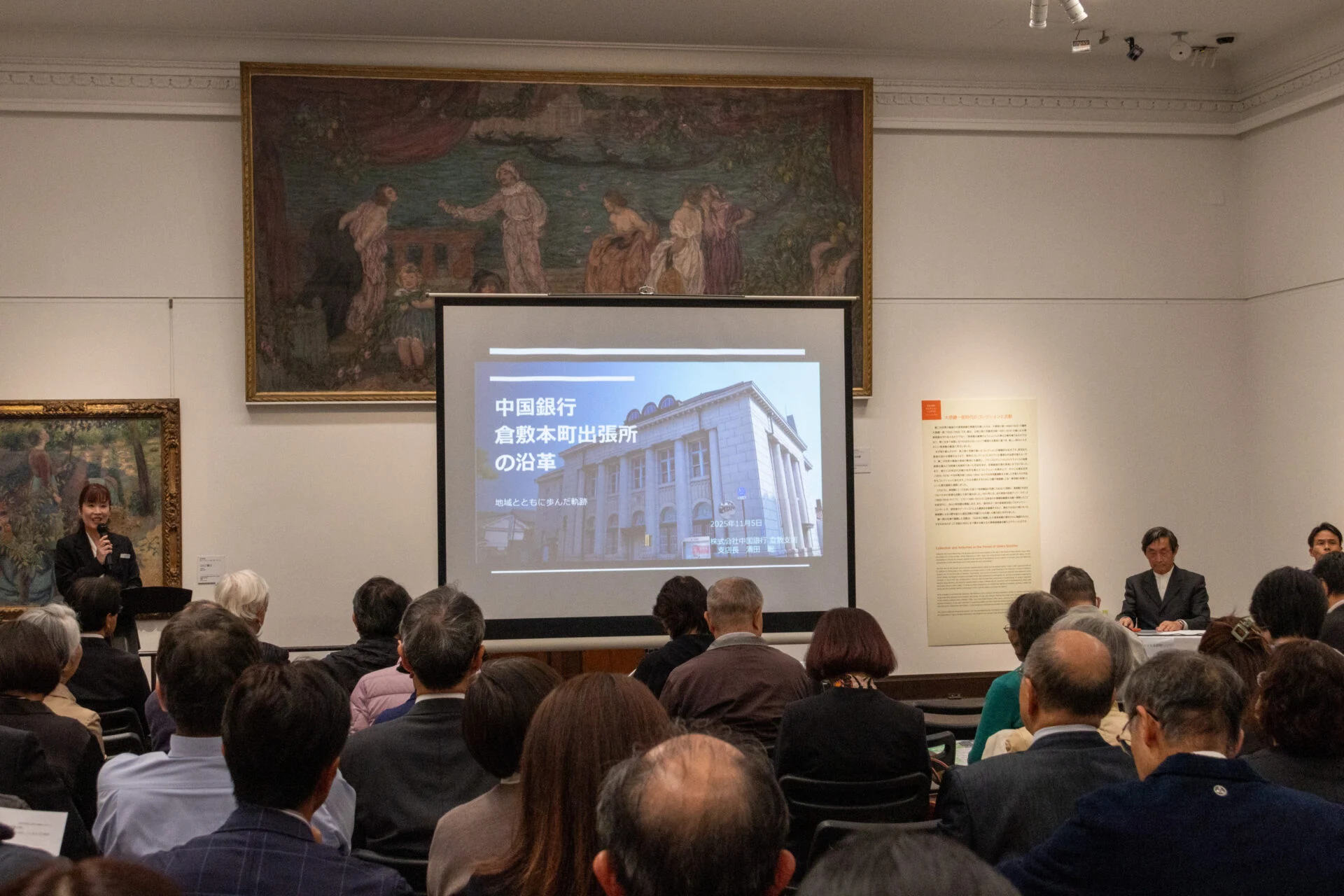
Following Professor Ueda's keynote speech, there was a presentation by Satoshi Kiyota, the branch manager of Chugoku Bank Kurashiki Branch, about the history of Chugoku Bank and the Kurashiki Honmachi Branch.
He provided a detailed explanation of the history from the establishment of "Daiichi Godo Bank," one of the predecessors of Chugoku Bank, by Ohara Magosaburo, to the present-day Chugoku Bank through subsequent mergers, using slides and commentary.
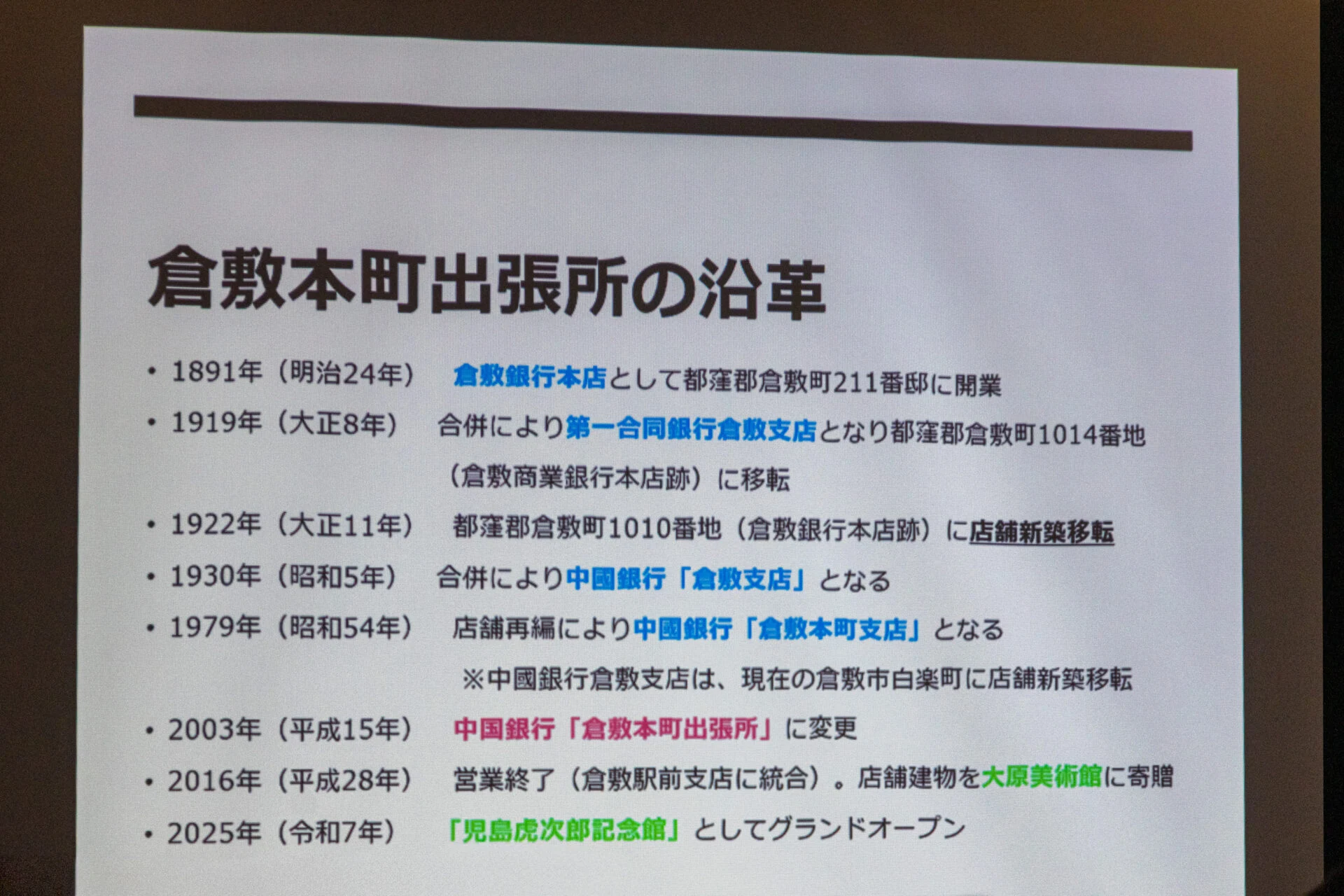
The former Kurashiki Honmachi Branch, which is now the Kojima Torajiro Memorial Gallery, is well-preserved in its original state, and many former employees feel nostalgic when visiting the exhibition room, stating that it is a special place for those who worked here.
Conclusion
This lecture was held as a collaboration between the banking and art museum industries.
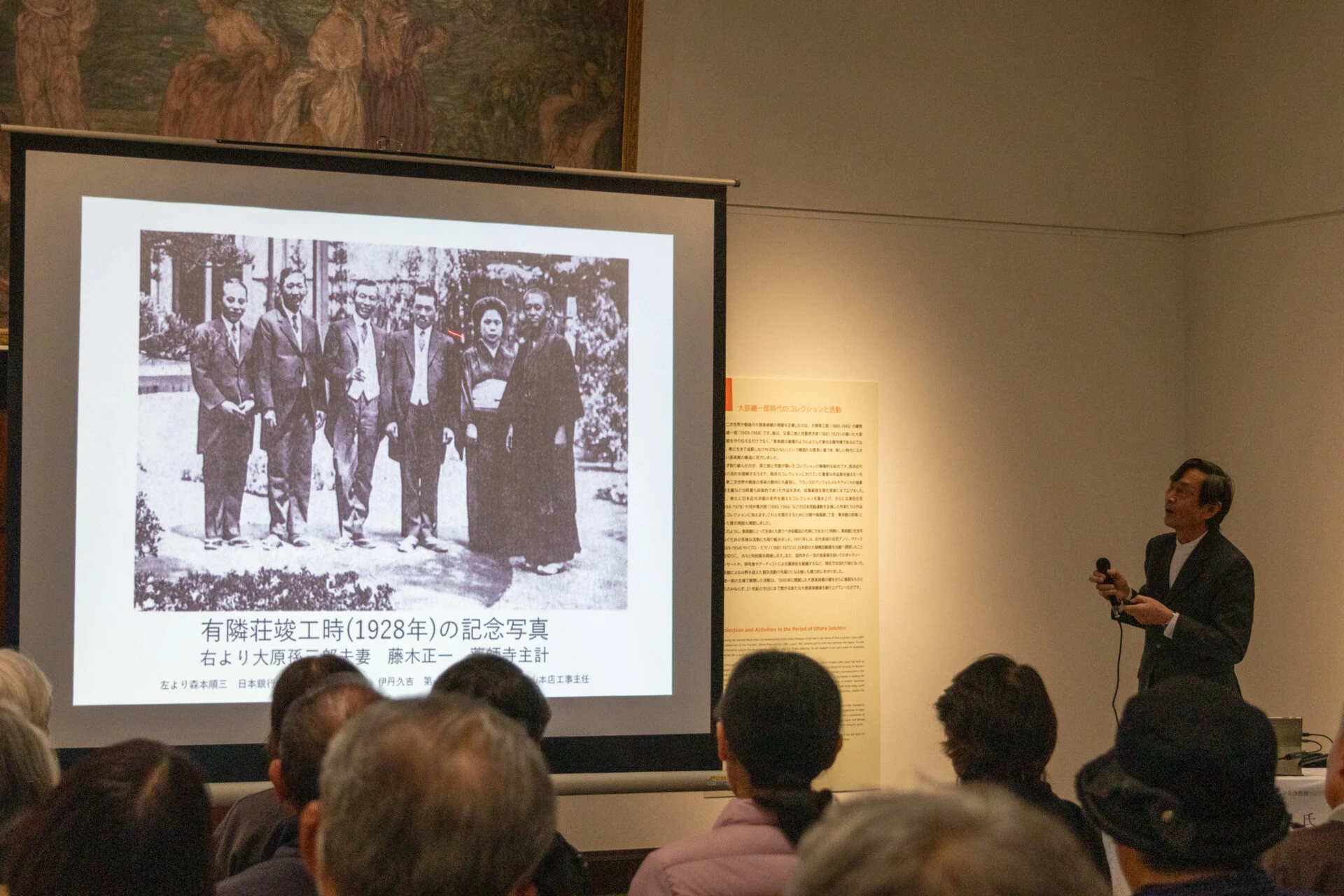
I was deeply impressed by the connection that has continued to this day, albeit in a different form, between the client, architect, and contractor from 100 years ago.
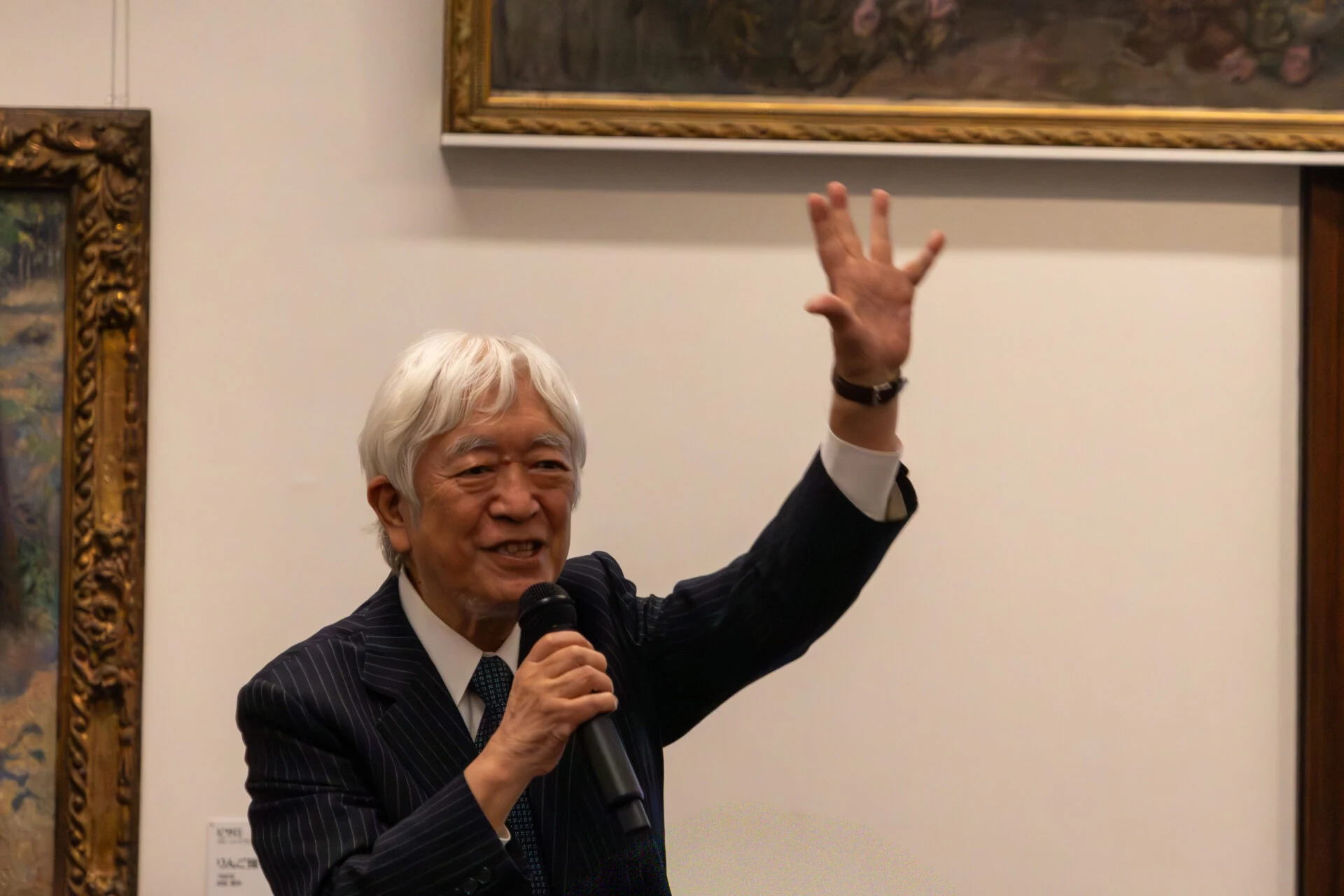
At the end of the lecture, there was a greeting from Honorary Director Ohara Kenichiro, during which he shared a memorable phrase.
“I hope that (Kurashiki) will be a part of a first-class country and a first-class region.”
The various legacies left by our predecessors, both tangible and intangible. I felt once again that it is our mission, as those living in the present, to update these and pass them on to the next generation.
Articles about Ohara Museum of Art
Data for the 95th Anniversary Commemorative Lecture of Ohara Museum of Art 'The Modern Appearance of Kurashiki from the Perspective of Bank Architecture'
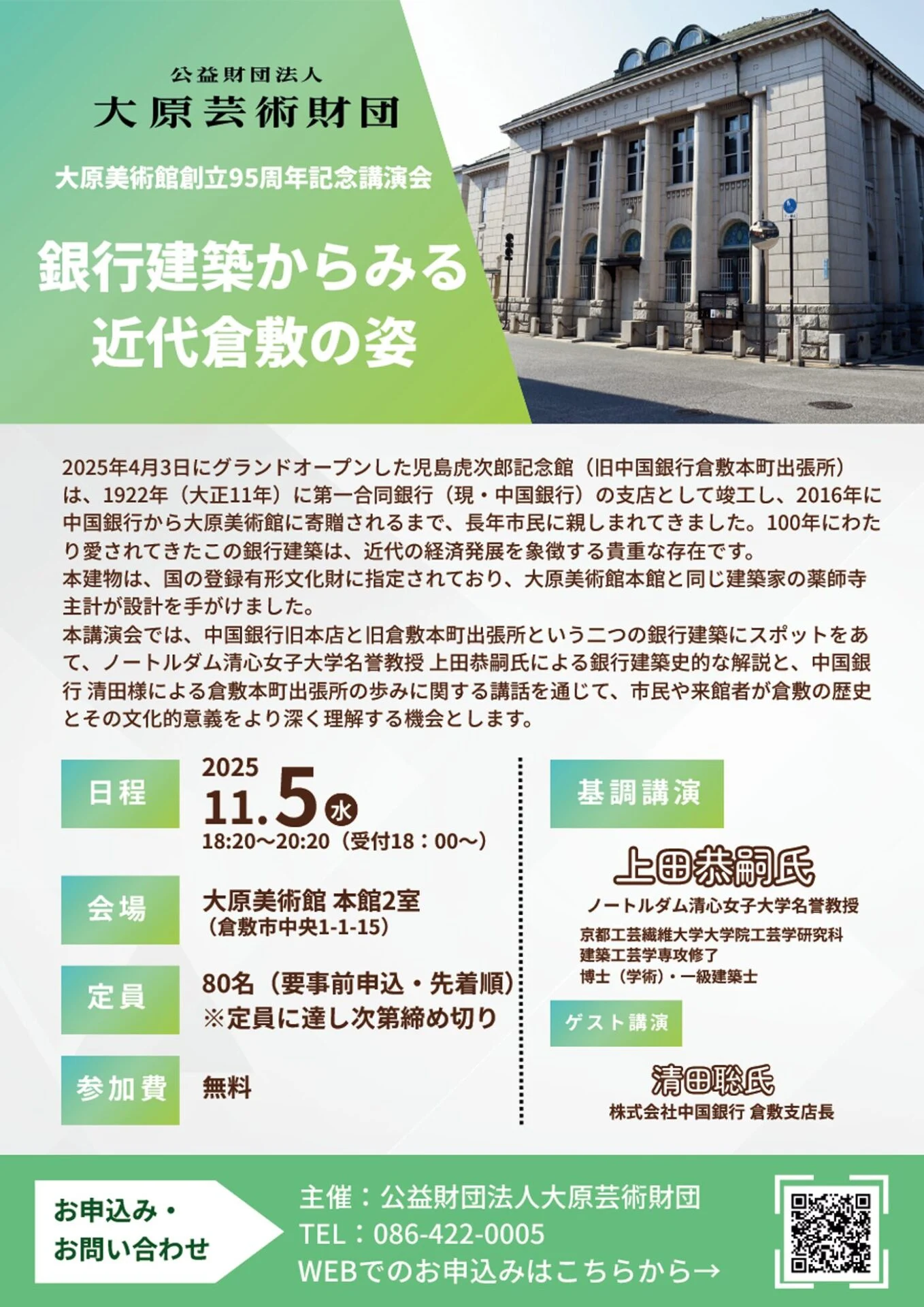
| Name | 95th Anniversary Commemorative Lecture of Ohara Museum of Art 'The Modern Appearance of Kurashiki from the Perspective of Bank Architecture' |
|---|---|
| Date | November 5, 2025 (Wednesday) 6:20 PM - 8:20 PM |
| Location | Ohara Museum of Art |
| Participation Fee (including tax) | Free |