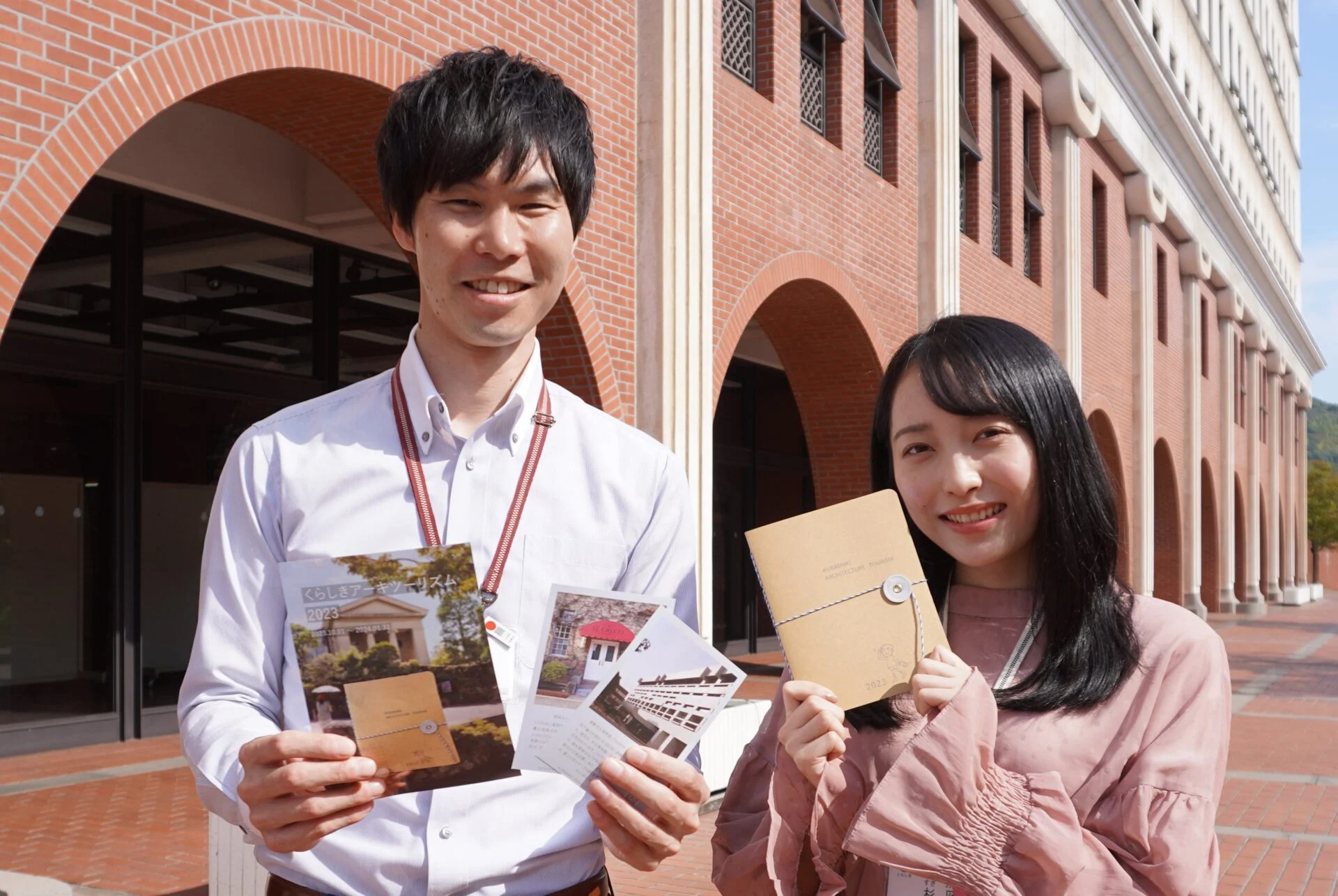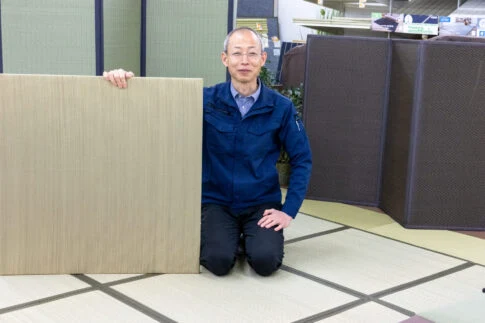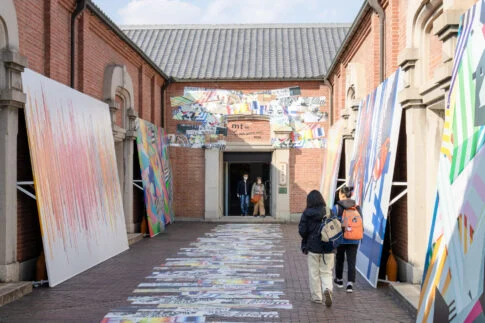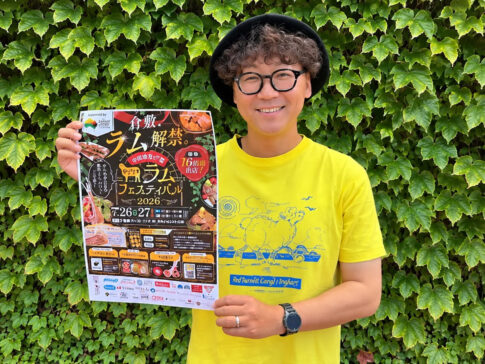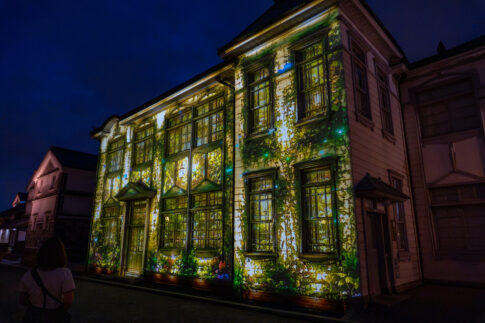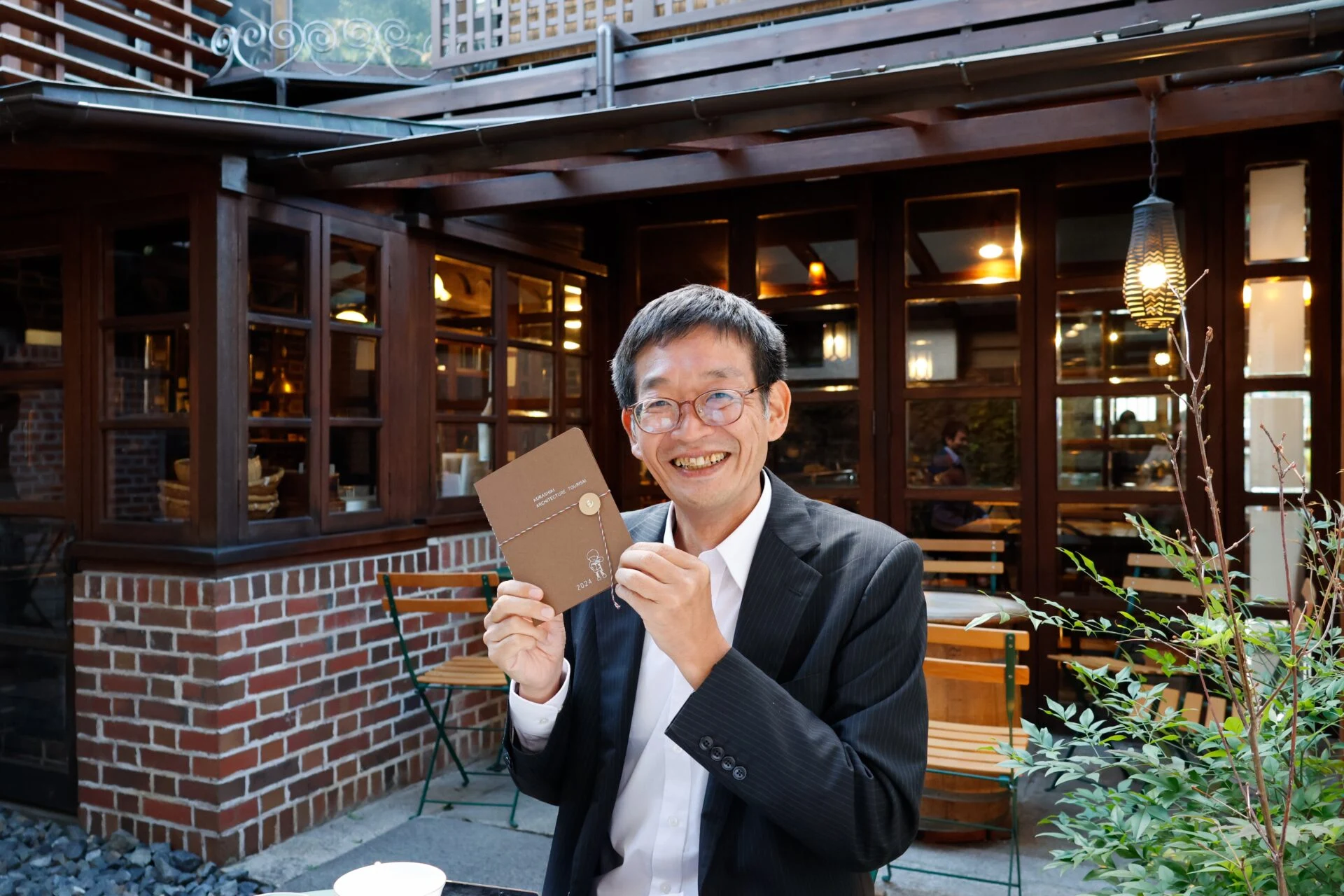
In the town rich in history and culture, the Bikan Historical Area of Kurashiki is currently hosting "Kurashiki Architourism 2024".
Held annually from autumn to winter, "Kurashiki Architourism" focuses on the buildings that form the townscape of Kurashiki, allowing participants to rediscover the charms that are often overlooked.
The theme for 2024 is "Buildings by Nameless Architects on Two Main Streets". While exploring the buildings crafted by the "Nameless Architects" that line the two main streets, Honmachi Street and along the Kurashiki River, why not enjoy the townscape woven with history and modernity?
The event will run from October 1, 2024 (Tuesday) to January 31, 2025 (Friday).
Overview of Kurashiki Architourism 2024
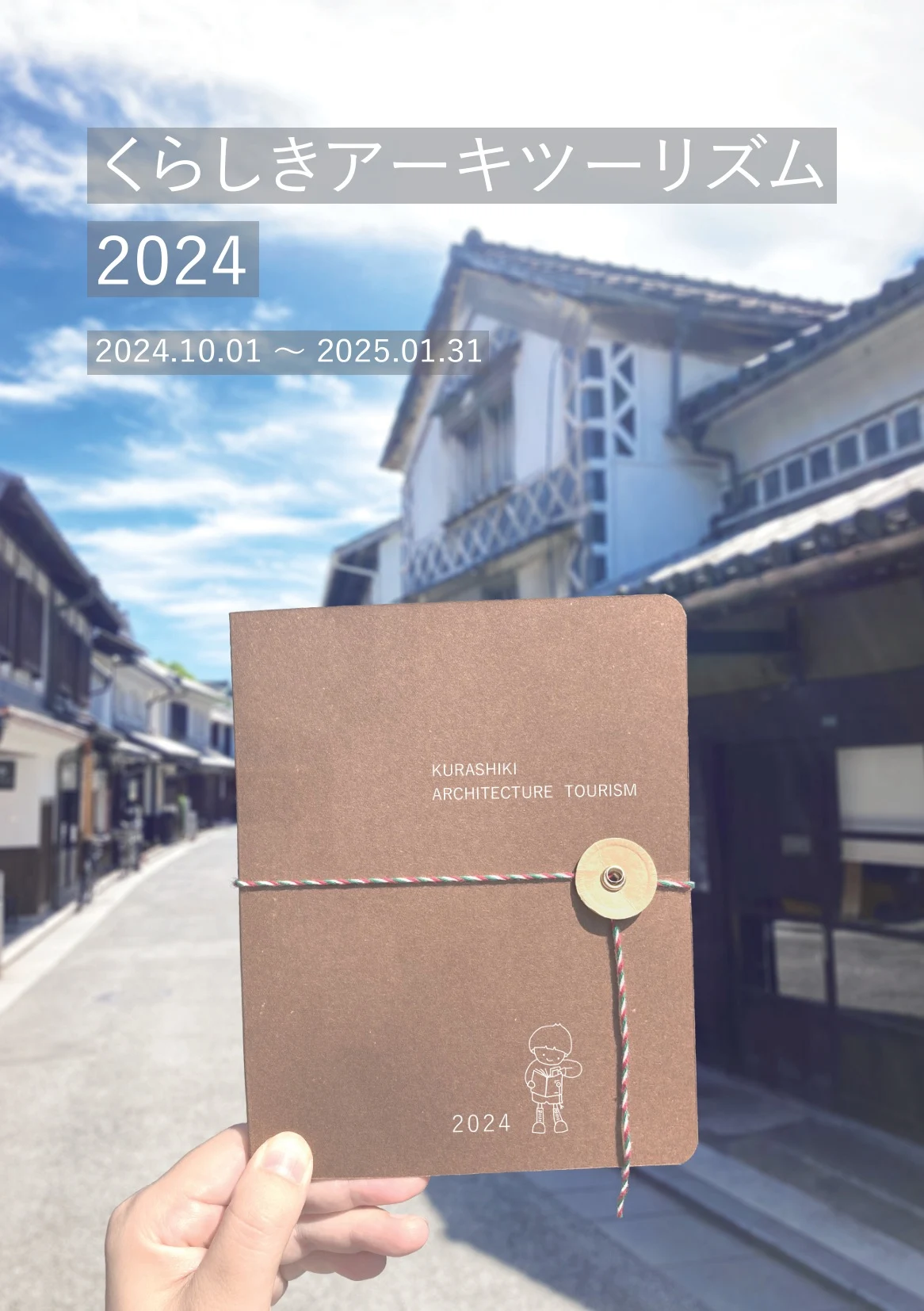
"Kurashiki Architourism" focuses on five buildings within the Bikan Historical Area. Participants can obtain a paper "Memory File" and collect "Building Cards" available at each building.
The five architectural structures highlighted in "Kurashiki Architourism 2024" are as follows:
- Ohashi House
- Ohara House Katalyzer
- Kurashiki Coffee House
- Inoue House
- Kusudo House atelier&salon Hashimaya
Each "Building Card" has two cards per building, and by collecting a total of 10 cards, participants can rediscover the charm of Kurashiki.

The Building Cards have a front and back; the front features a photo and detailed description of each building.
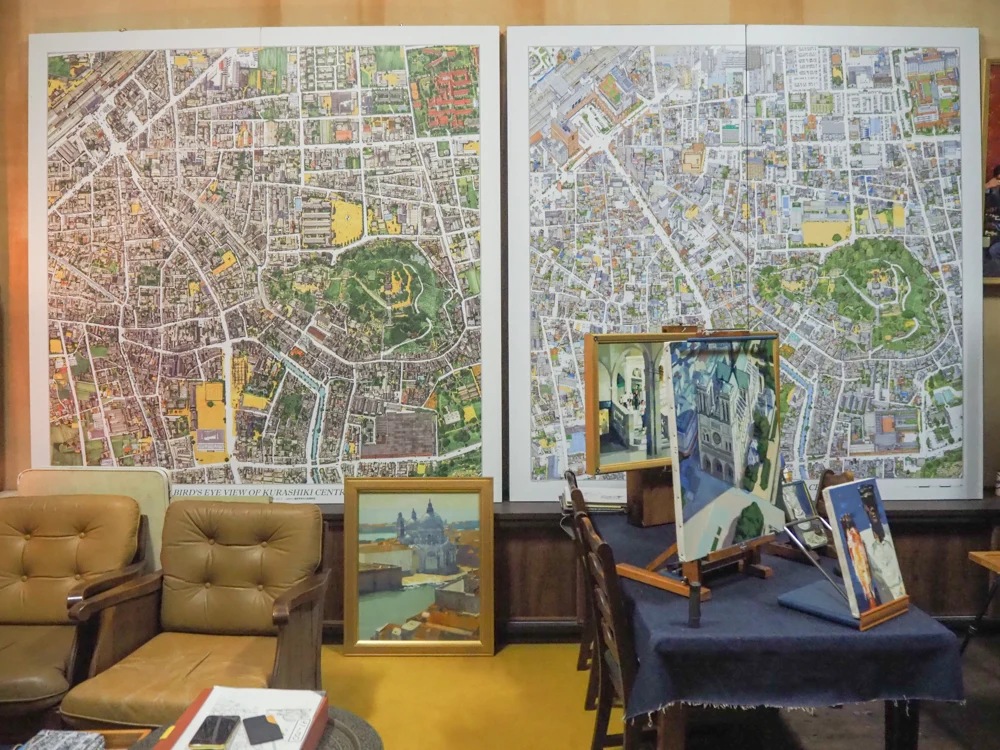
The back includes a bird's-eye view illustration by Naoki Okamoto, a bird's-eye view artist from Kurashiki City, and these illustrations help understand the structure and surrounding environment of each building.


How to Enjoy Kurashiki Architourism 2024
First, get your "Memory File." The Memory File is not only for storing the "Building Cards" but is also convenient for keeping admission tickets to each facility, priced at 500 yen (tax included) per book.
The Memory File can be purchased at the following facilities.
- Tourist Information Office (Kurashikikan)
- Kurashiki City Kurashiki Monogatari-kan
- Ohashi House
- Inoue House
- Kusudo House (inside atelier&salon Hashimaya)
- Kurashiki Coffee House
- Ohara House Katalyzer (inside the book café)
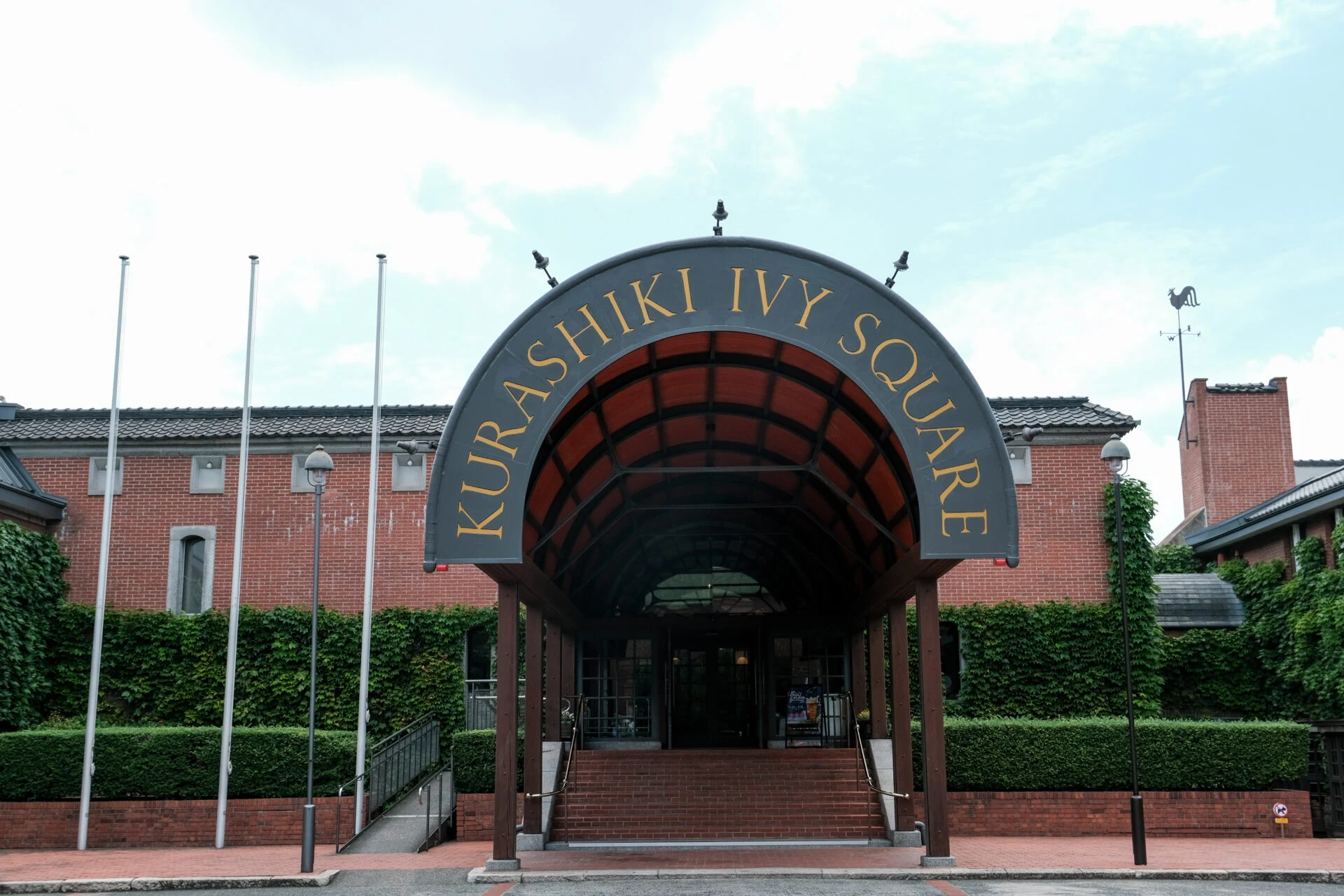
- Kurashiki Ivy Square
The Memory File is limited to 300 copies.
Architectural Structures in the Bikan Historical Area
This year's (2024) Kurashiki Architourism is characterized by its spotlight on "Nameless Architects".
The Bikan Historical Area of Kurashiki is said to have a harmonious mix of buildings from various eras, many of which were designed by well-known architects.
For example, Yakushiji Kazue, who designed the Ohara Museum of Art, and Urabe Shizutaro, who designed the Kurashiki International Hotel and Kurashiki Community Center, are among the many architects whose names are known for their buildings.
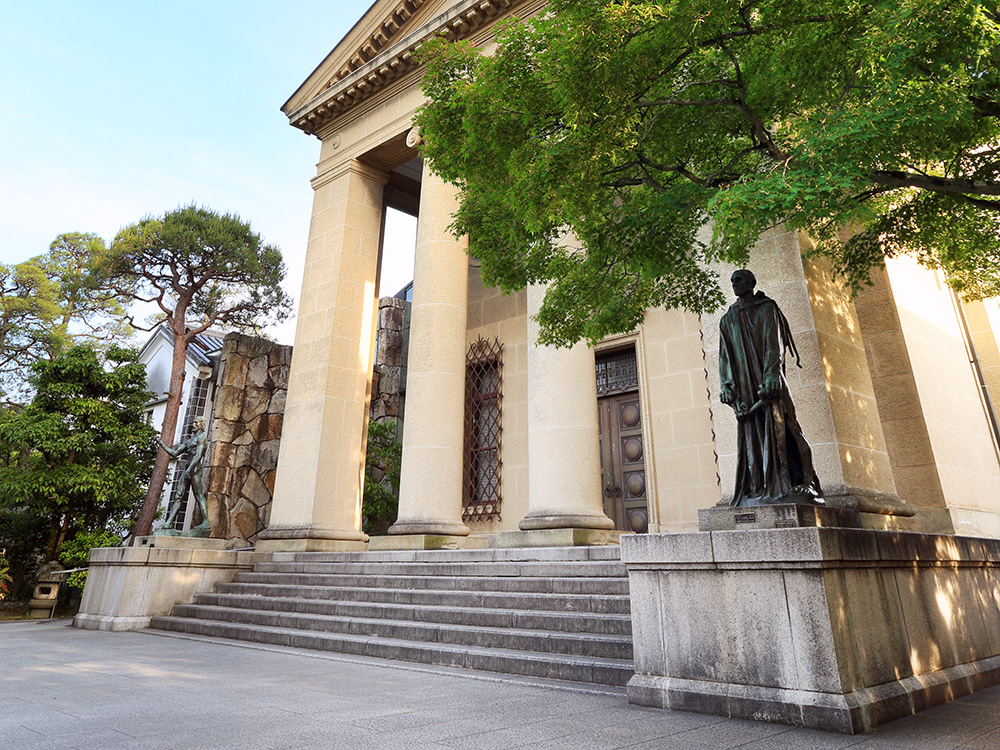
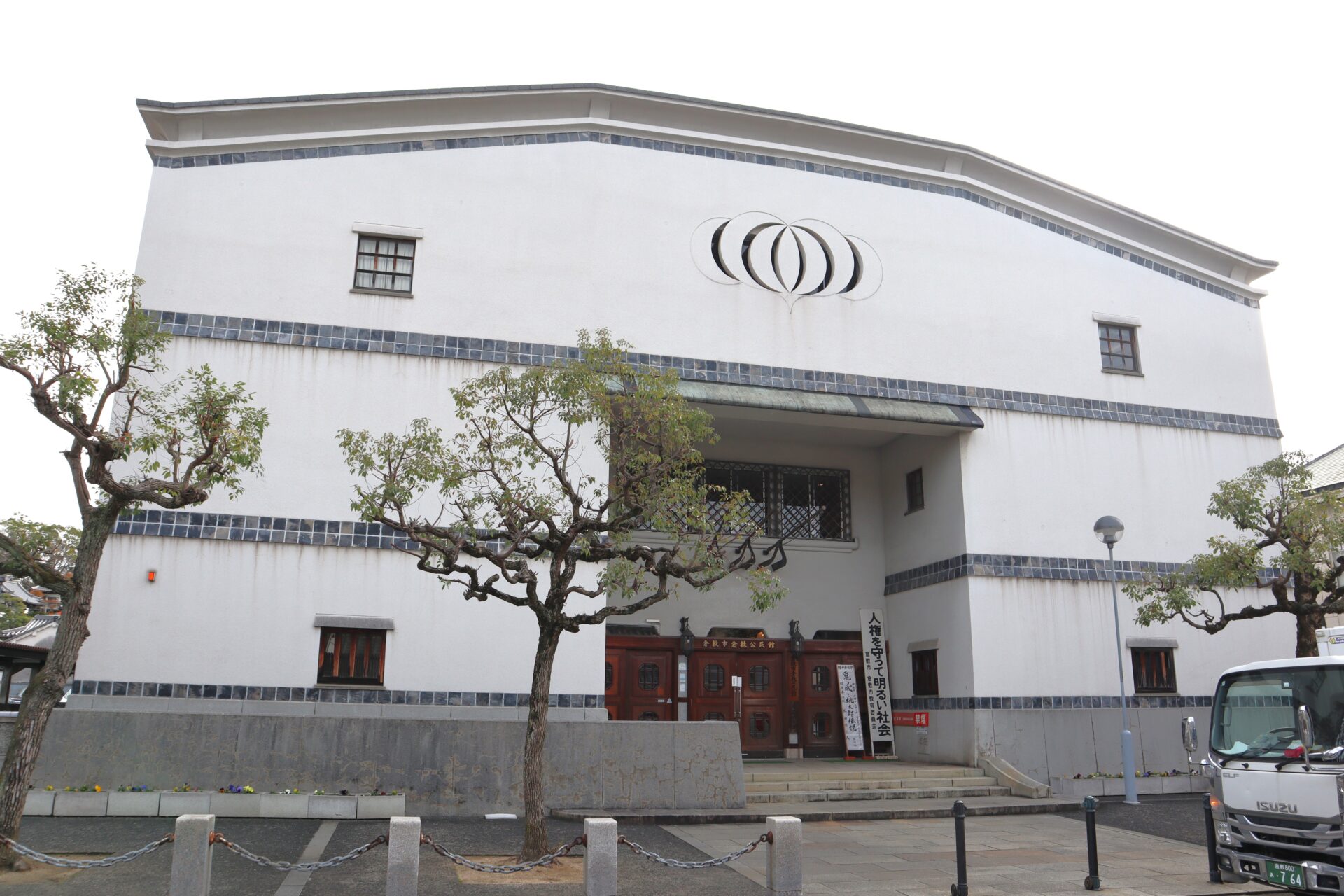
All of these buildings are essential in forming the townscape of Kurashiki, but it is said that most of the older existing buildings do not have known designers.
The buildings of the "Nameless Architects" are also indispensable when discussing Kurashiki.
During this event, I walked around the town while collecting "Building Cards" with the "Memory File" in hand, visiting the five highlighted locations.
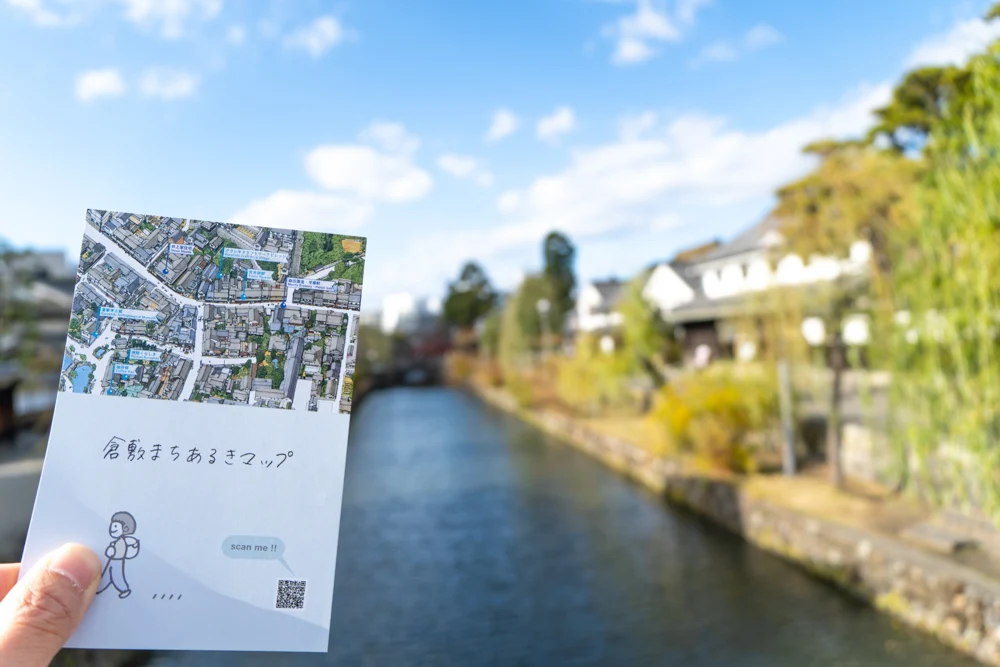
Kurashiki Walking Map
Opening the Memory File reveals a QR code linking to the website "Kurashiki Walking Map", allowing you to explore while viewing the bird's-eye view illustrations drawn by Naoki Okamoto.
The Kurashiki Walking Map displays the main buildings around the Bikan Historical Area, and by clicking or tapping, you can view explanations of the buildings.
There are bird's-eye view illustrations from 1963 and 2005, and comparing them while walking will help you realize the differences with the current "town of Kurashiki."

Using the walking map while walking is very dangerous. Please stop and use it.
The Memory File is filled with content that enhances your exploration, including "Let's Find! Secrets in Kurashiki's Townhouses," which features cute illustrations alongside little architectural trivia, making your stroll even more enjoyable.

Actual Tour Experience
Using the Kurashiki Walking Map, I visited "Ohashi House," then "Ohara House Katalyzer," "Kurashiki Coffee House," "Inoue House," and finally "Kusudo House" in that order. Excluding the time spent on guided tours, you can visit all in about 20 minutes.


Exploring the Five "Buildings of Nameless Architects"
I obtained the "Memory File" and explored the town, and the architectural trivia and cute illustrations written in it, along with the detailed descriptions of the buildings on the "Building Cards" and the bird's-eye view map of Kurashiki drawn on the back, made the stroll even more enjoyable.

Additionally, the "Memory File" is intentionally made of paper, which gives it a warm feeling. Keeping items like "admission tickets" and "receipts" in it preserves them as "memories."
It might also be fun to keep it in your room at home and reflect on it later.
I spoke with Kawamoto Jiro from Uraha Design, the company that planned this project, about the background and purpose of the project, as well as the thoughts behind the event.
Interview about "Kurashiki Architectural Tourism"

How Did "Kurashiki Architectural Tourism" Begin?
What was the trigger for "Kurashiki Architectural Tourism"?
Kawamoto (no honorifics)
The trigger was the creation of the Kurashiki Town Walking Map.
In 2019, when we held the event "The Work of Architect Uraha Shintaro" at Kurashiki Ivy Square, prominent figures in the architectural industry, such as Fujimori Terunobu, the director of the Edo-Tokyo Museum, and Shigemura Tsutomu, an emeritus professor at Kobe University, said, "There is no other town like Kurashiki, where culture has accumulated, so it should be properly introduced."
So, we collaborated with the Kurashiki City Urban Development Promotion Division to create the Kurashiki Town Walking Map. When you click or tap on the buildings displayed on the map, you can learn about them.
The map is the work of bird's-eye view illustrator Okamoto Naoki.

Kurashiki, where culture has accumulated, becomes even more enjoyable when you learn about the buildings that form the backbone of the town, the history of their construction, and the people involved.
I thought it would be even more enjoyable to learn about Kurashiki's buildings in chronological order, so I consulted with the Kurashiki City Tourism Division about wanting to plan "Kurashiki Architectural Tourism," and they said, "That sounds interesting, let's give it a try."
"Kurashiki Architectural Tourism" is designed to have a theme each year, making it easier for people to understand Kurashiki's buildings and culture.
Theme of "Architectural Tourism"
When did Architectural Tourism start?
Kawamoto
Kurashiki Architectural Tourism started in 2022, and this year marks the third time.
What were the themes of the past two "Kurashiki Architectural Tourism" events?
Kawamoto
The theme in 2022 was "The Harmony of Old and New," which was cherished by architect Uraha Shintaro, and we introduced five buildings he worked on.
Uraha Shintaro, who was from Kurashiki City, established the Kurashiki Architectural Research Institute (now Uraha Design) in 1962 with the cooperation of the then president Ohara Soichiro, and he supported Ohara Soichiro's vision of "Kurashiki's urban development" as an architect.
- Kurashiki Archaeological Museum Extension
- Ohara Museum of Art Annex
- Kurashiki International Hotel
- Kurashiki Community Center
- Kurashiki Ivy Square
In the following year, 2023, we introduced five buildings centered around the works of architect Yakushiji Kazue, who is from Soja City. The theme was "Architect Yakushiji Kazue and the Changes in the Town."
| Building | Designer |
|---|---|
| Ohara Museum of Art Main Building | Yakushiji Kazue |
| Yurin-so Villa | Yakushiji Kazue |
| Café El Greco | Yakushiji Kazue |
| Kurashiki Church | Nishimura Isaku |
| Kurashiki City Art Museum | Tange Kenzo |
Both in 2022 and 2023, the focus was on the architects, introducing the buildings they worked on to help people learn about the town of Kurashiki.
What is the theme for this year (2024), "Nameless Architects"?
Kawamoto
The name "Nameless Architects" was suggested by Okamoto Naoki, who provided the bird's-eye view map.
Originally, the plan for "Architectural Tourism" was to introduce "Uraha Shintaro" first, then his senior "Yakushiji Kazue," and in 2024, to focus on old buildings... intending to trace back through the years.
Okamoto Naoki also mentioned, "It might be good to introduce the town as one created by craftsmen and carpenters who worked on old buildings," and thus "Nameless Architects" became the theme for 2024.
What are the "two main streets" mentioned in the theme?
Kawamoto
As stated on the back of the pamphlet, the "Main Street" and "Along Kurashiki River" are referred to as the "two main streets."
Kurashiki was once called "Kibi no Anau," a sea area that extended close to the present-day Bikan Historical Area. Later, the town developed through land reclamation.
The "Tsurugatayama," which is also on the pamphlet's map, was once an "island," and "Main Street" developed near the sea.
On the other hand, by combining "Along Kurashiki River," which developed after land reclamation and was used as a canal, with the "two main streets," I thought it would allow people to feel the flow of time, and thus the theme became "Buildings of Nameless Architects on the Two Main Streets."
If you explore the "five buildings of nameless architects" located on the "two main streets," I believe you will experience the flow of time and culture in Kurashiki.
Thoughts on the "Memory File"
What is the "Memory File"?

Kawamoto
It is a paper file with vinyl pockets inside, designed to hold the "Building Cards" available at the buildings featured this time.

Wouldn't a "stamp rally" or a digital method using smartphones be more convenient and easier to participate in?
Kawamoto
Indeed, there are many events where you collect stamps like in a "stamp rally," but "Kurashiki Architectural Tourism" is a bit different.
I believe that "travel is about creating memories," and with the "Memory File" in hand, you enter buildings you wouldn't normally go into.
When you come out, you have gained a little knowledge, and that experience becomes a "memory."
You can capture the beautiful townscape on the way to your destination, enjoy delicious coffee at a café, or find wonderful crafts at a souvenir shop... various "memories" are created through walking around the town.
That's why I named it the "Memory File."
Additionally, by intentionally making the "Memory File" out of paper instead of using digital methods, we created a warm presentation.
You can enjoy the tactile sensation of turning the pages and the process of placing each "Building Card" into the vinyl pockets, which is a feeling that cannot be experienced digitally. I thought that would be more "Kurashiki-like."
By the way, this is handmade.

For example, this multi-tack (the round part secured with a string) is made by punching holes and pressing each one with a one-yen coin. Continuing this process can make your fingers hurt.
However, if we were to eliminate this craft-like feel, it would lose the essence of what makes it Kurashiki, so I am intentionally particular about it.
The inner pocket has 12 slots, and even if you put all five building cards in, there will be 2 slots left over. You can think about what to put in those 2 slots yourself, and in the end, that will also become a "memory."

Please share a message for the readers.
Kawamoto
Kurashiki is known for its old town with white walls and black tiles, but it is a city that is evolving while properly incorporating new elements.
By walking around the old warehouses and townhouses, which are said to be historic, I believe you can discover contemporary art and modern architecture, which will broaden the scope of your travel and allow you to enjoy the charm of Kurashiki, where history and modernity harmonize, on a deeper level.
Please experience "the story of Kurashiki" with the "memory file" of Kurashiki Architourism 2024 in hand.
Conclusion
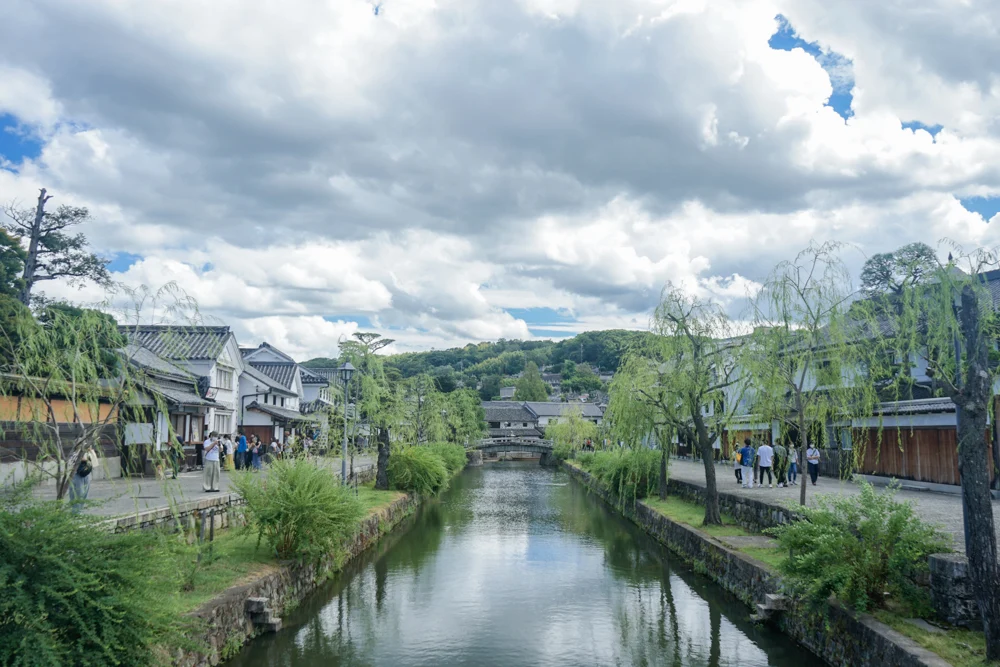
One reason the Bikan Historical Area is said to be beautiful is the exquisite balance of old buildings (such as Edo-period townhouses) and modern buildings (such as Taisho-era Western-style houses) coexisting.
The streetscape, which harmonizes with modern life while preserving the historical landscape, allows you to feel the history and culture of Kurashiki.
I also actually visited each of the buildings. There were new discoveries in each building, allowing me to catch glimpses of the lives of merchants from the Edo period, marvel at the architectural techniques of the Meiji period, and experience the flow of time from the Taisho period to the early Showa period while walking through the town.
By visiting the five highlighted buildings, you can feel "the story of Kurashiki (the story of Kurashiki, which flourished as a merchant town)" through "Kurashiki Architourism 2024."
With the "memory file" in hand, why not discover your own "story of Kurashiki"?
Data for Kurashiki Architourism 2024
| Name | Kurashiki Architourism 2024 |
|---|---|
| Dates | October 1, 2024 (Tuesday) to January 31, 2025 (Friday) |
| Location | Ohashi House, Ohara House Katalyzer, Kurashiki Coffee House, Inoue House, Kusudo House atelier & salon Hashimaya |
| Participation Fee (including tax) | Free (memory file 500 yen (including tax)) * The "building cards" are distributed for free at each facility, but some facilities may require an entrance fee when touring inside. Please check the websites of each facility for details. |
| Website | Kurashiki Architourism 2024 |